
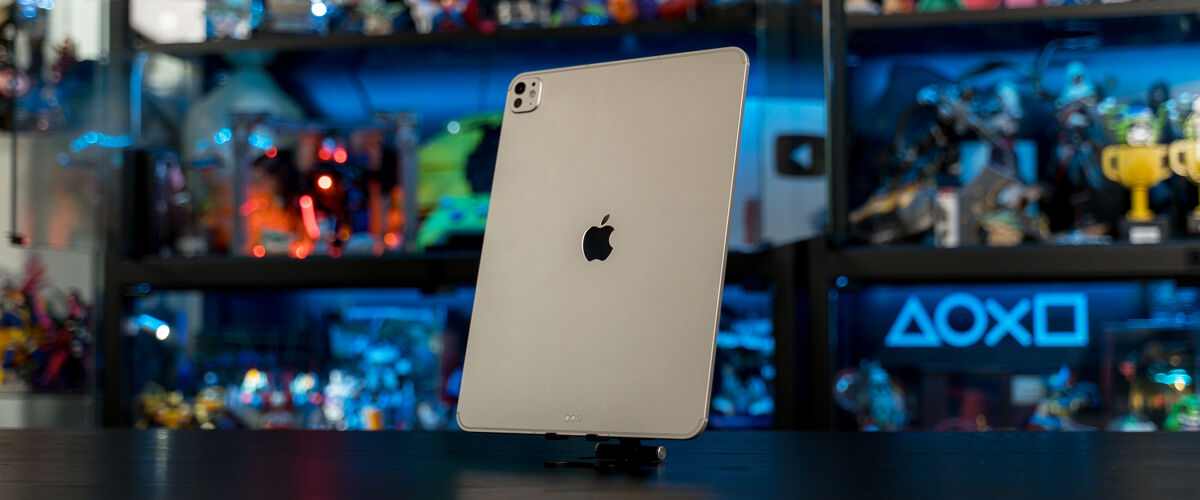
When Apple skipped releasing new iPad models in 2023, few consumers took notice, as the 2022 models were still performing well, and it seemed more like a strategic pause, to show there wasn’t always a need for iterative product launches just to fit an annual calendar. The return of the M4-powered iPad Pro in May 2024 was then heavily anticipated, because if there is something consumers dislike more than planned annual upgrades, it’s the denial of one. But here we are, a little over a year later, and Apple has done it again, this time with the M5 chip powering the iPad Pro, and the question is whether this is the upgrade that finally makes sense for existing iPad owners.
Since its debut in 2010, the tablet has long straddled a curious market position where it offers features far superior to a smartphone, but is also somewhat less productive than a laptop, even if it’s capable of outperforming it in terms of size, portability and performance. The debut of the premium Apple iPad Pro in 2015 positioned the high-end model as a statement piece, securing the category as one that could stand toe-to-toe with laptops as creative and productivity powerhouses. And with the M5 chip debut across this year’s 11-inch and 13-inch iPad Pro models, that statement has grown considerably bolder.
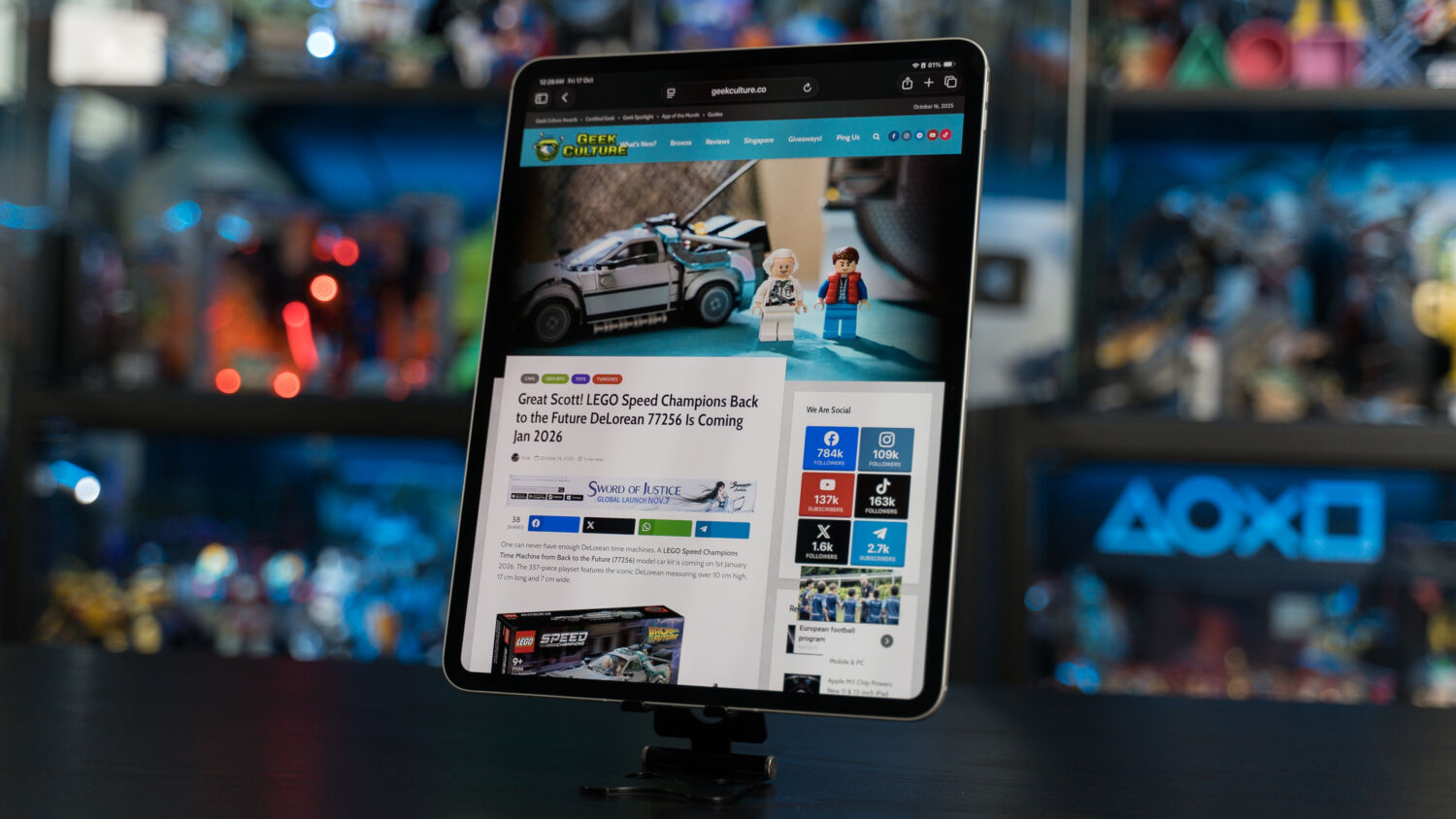
Apple’s decision in placing the M5 chip in just three product categories this year, on the MacBook Pro 14, Apple Vision Pro and iPad Pro, without the need to launch an M5 Pro or M5 Max version of the new chip, which is an indicator of where it wants to position the iPad Pro, as being more powerful alternatives to the current MacBook Air and its laptop contemporaries. Along with the third-generation 3-nanometer technology the chip is built on, Apple is touting this as the next big leap in artificial intelligence (AI) performance and it’s not hard to see why – other companies are pushing AI on regular computers and desktops, but here is a tablet offering the same capabilities, and now backed by a hardware chip in a product category that no one else seems to be focusing much on.
If you read the news on the new M5 and iPad Pro, one of the things you might have missed out on is that the iPad Pro models offer two versions of the M5, as it did with the M4. Models with 256GB and 512GB capacity, armed with 12GB of RAM, are also packaged with an M5 with a 9-core CPU and a 10-core GPU. Those with 1TB and 2TB of storage come with the same M5 chip found on the MBP 14 and Vision Pro, and 16GB of RAM. This differentiation allows the company to target different groups of consumers with performance and value, but what’s key here is that the GPU architecture remains the same, as the M5 features a Neural Accelerator in each of its 10 GPU cores. This translates into 4 times the peak computation performance for AI workloads compared to the M4, and 5.6 times that of the M1 iPad Pro from 2021.
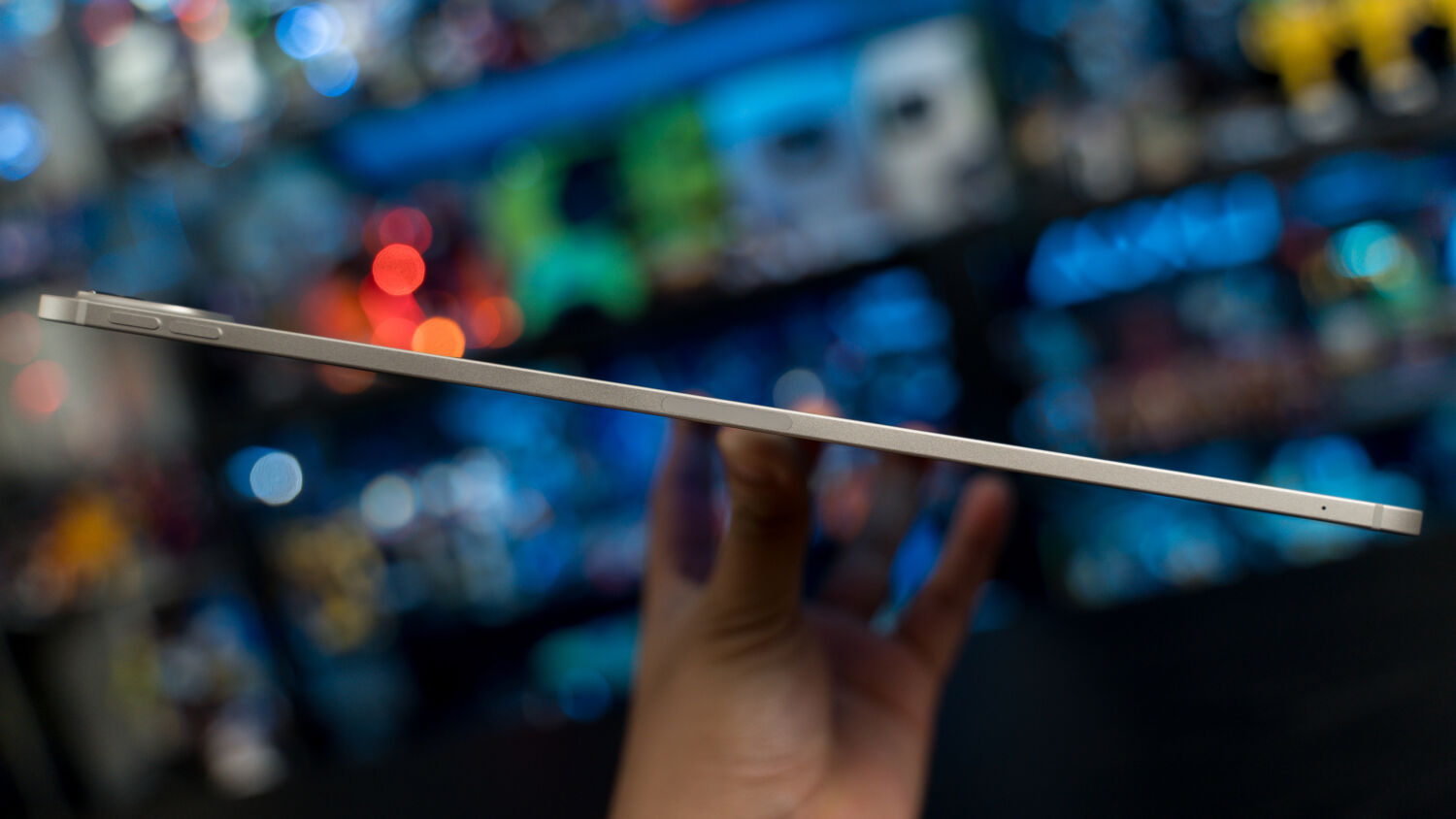
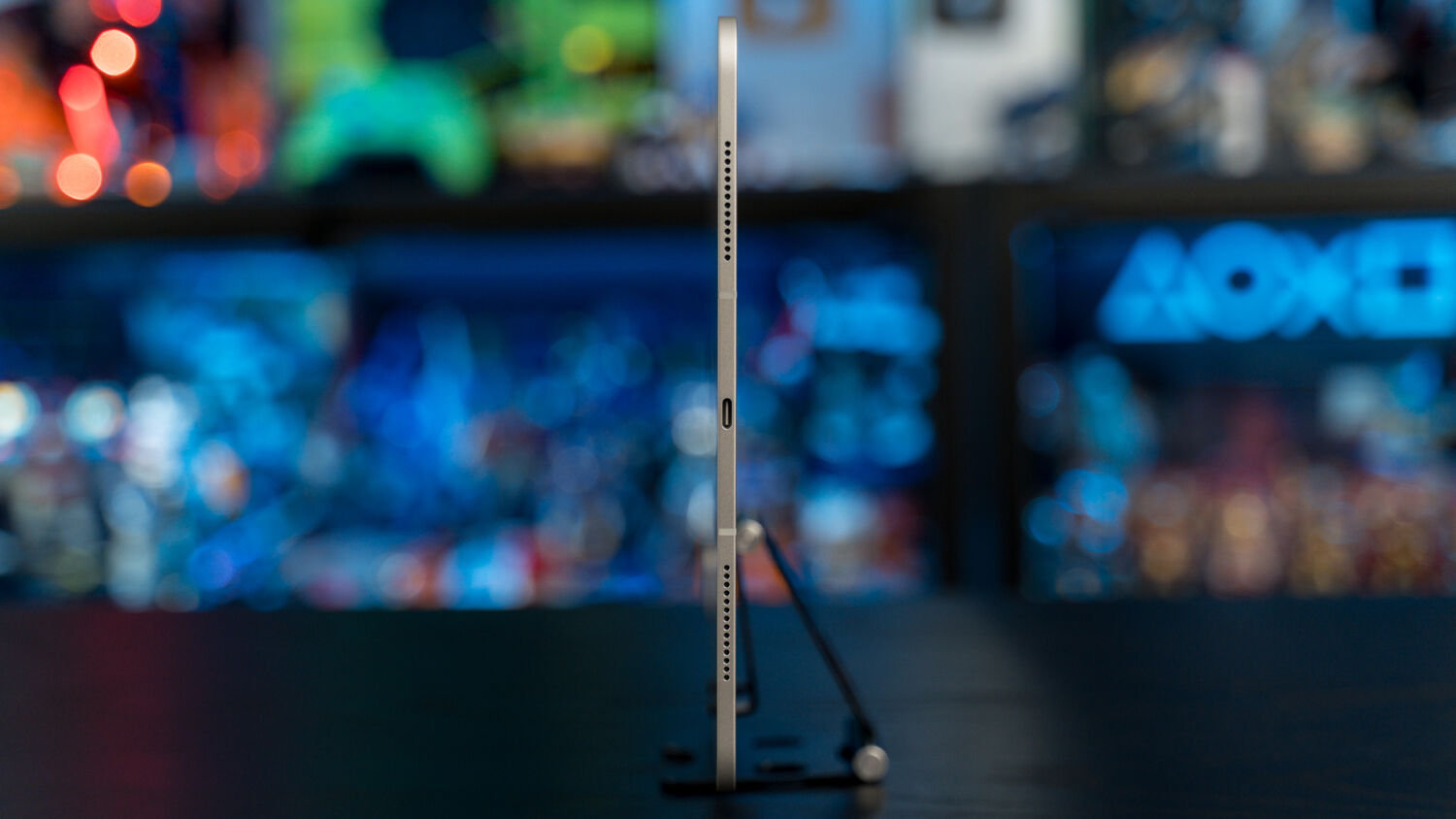
AI use, while increasing, is still not prevalent, especially when it comes to native support that doesn’t require a service to a third-party AI model, but with the iPad Pro, Apple is sending a clear signal that its AI deployment is not hardware category specific, and if you’re accustomed to using a tablet, and want AI, don’t feel pressured to settle for a traditional computer or a phone – there are other options to suit your needs.
If you’re comfortable with video editing on the go with a tablet and not a workstation, then AI on an iPad Pro running apps such as DaVinci Resolve will feel no different. Musicians creating songs and making music on Logic Pro on the iPad can easily tap on AI as part of their workflow without moving to a laptop, as your existing iPad productivity doesn’t need to change. The faster 16-core Neural Engine, combined with the GPU Neural Accelerators, means AI and Apple Intelligence operate with greater fluidity, making the whole AI integration feel more like an essential tool you seamlessly weave in.
On top of that, the unified memory bandwidth has now jumped to 153GB/s, making it an almost 30 per cent improvement over the M4, and more than double that on the M1, which means you can do more across more apps like Procreate and DaVinci Resolve, without feeling a strain.
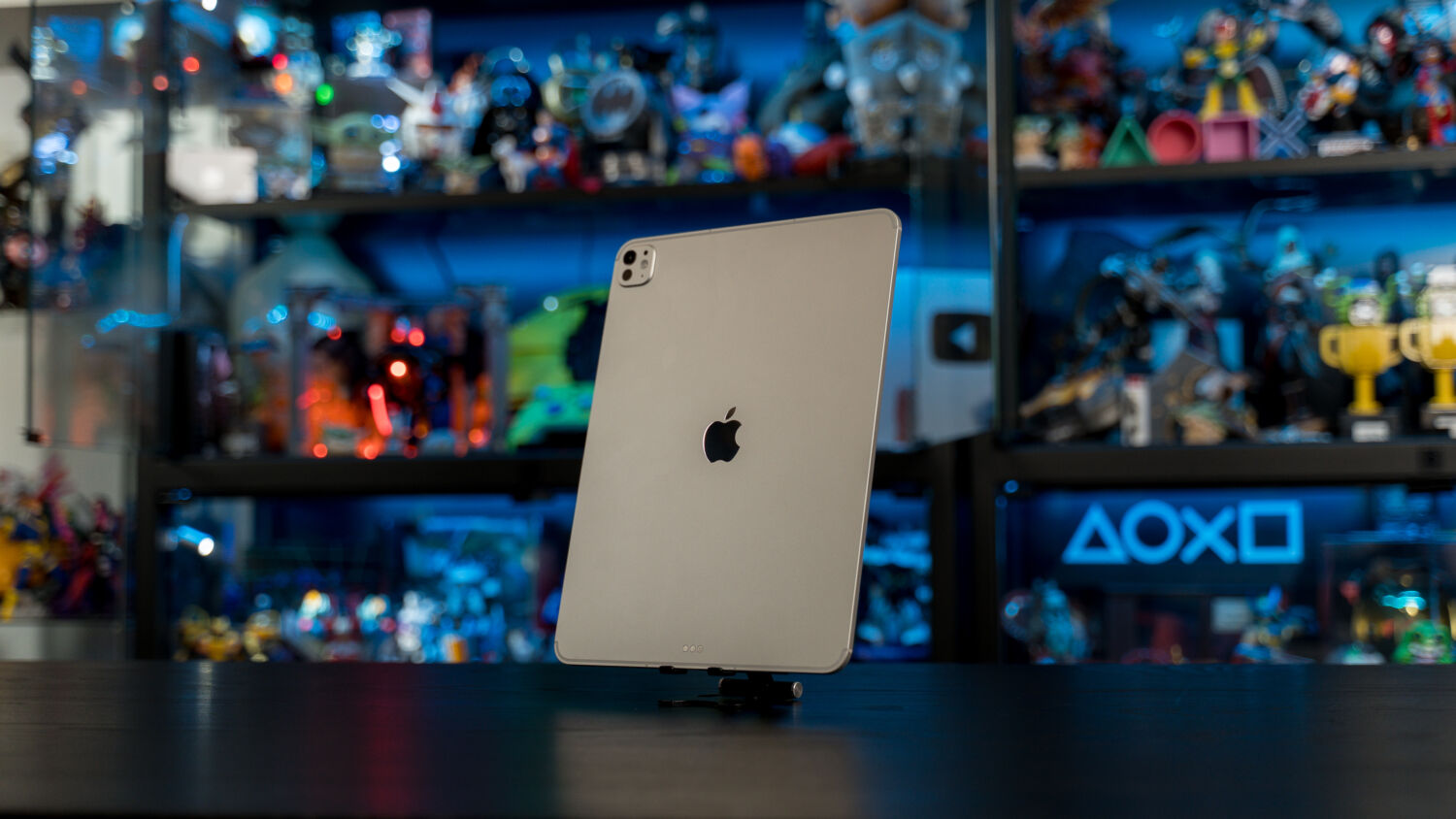
Running the new 13-inch iPad Pro review unit through GeekBench 6, the M5 generated a single-core score of 4,117 and a multi-core score of 16,369 on the 1TB model with its 10-core CPU configuration. For comparison, we clocked a single-core score of 3,420 and a multi-core score of 14,274 on last year’s M4 iPad Pro equivalent, which translates to an impressive 20 per cent single-core improvement, and a 14 per cent multi-core performance gain.
With Geekbench AI, the M5 model produced a single-core result of 5,286 for CPU and a GPU result of 12,650, and a Neural Engine benchmark of 5,302, compared to 4,931, 10,031 and 4,935, respectively, on the M4 model.
Otherwise, Apple, as always, chose not to mess with its design offering here, as the stunning Tandem OLED Ultra Retina XDR display from last year makes a return, offering the same 1600 nits of peak brightness with HDR content, and 1000 nits of full-screen brightness. The 13-inch model maintains its 2,752 x 2,064 pixel resolution at 264 ppi, while the 11-inch offers a 2,420 x 1,668 pixel resolution, also at 264 ppi.

For those using the device to watch videos, edit photos or produce video content, the display continues to be the gold standard, producing a level of detail and highlights that cannot be found on other devices. Whether you’re watching the new Superman film or the superior Man of Steel, you know that the differences in visual accuracy and style between both films have nothing to do with the impressive screen on this device.
The inclusion of the N1 chip brings Wi-Fi 7 support to the iPad Pro for the first time, though you’ll need the appropriate router to take advantage of it, and thanks to the Deco BE22000 mesh router, we could download Netflix videos for offline viewing or stream high-resolution content with ease. For those of you who use your iPad Pro for work calls, there is just something different about tapping on the device’s 12MP Ultra Wide front camera, which is ideal for Zoom, Teams or FaceTime calls.
As part of Geek Culture’s battery of gaming tests, we also fired up the device running a series of demanding titles, such as Wuthering Waves, Zenless Zone Zero, Genshin Impact and Delta Force, and the M5 iPad Pro did not disappoint. Each game ran with no issues on maximum settings, with plenty of performance room to spare, so the combination of a powerful GPU and a stunning display makes this the best mobile gaming device available, assuming you can get past the fact that you’re gaming on a tablet.
But as always, the question is never if you should upgrade, but when. Owners of last year’s M4 iPad Pro shouldn’t be upgrading to the M5, unless you are deep into AI or productivity workflows that require that additional boost the chip provides. But if you’re holding on to an M1 or M2 iPad Pro, this should be the realisation that the performance gains here warrant a relook at how you can use the device.
At S$1,499 and S$1,799 for the base 11-inch Wi-Fi and Cellular model, and S$1,999 and S$2,299 for the base 13-inch Wi-Fi and Cellular model, and up to S$3,649 for the 2TB 13-inch Wi-Fi model with nano-textured glass, this is a heavy investment that doesn’t come with accessories such as the Magic Keyboard (S$529) and Apple Pencil Pro (S$199), which means your total investment can easily climb to close to S$2,500, which is in the MacBook Pro. Funnily enough, the base MBP 14 is priced from S$2,199, though with the iPad Pro, you get a touchscreen, Apple Pencil and cellular connectivity, along with a form factor that fits unique use cases.
The iPad Pro continues to exist in a category of one because there’s simply nothing else like it, and with the M5, Apple is ensuring that nothing else comes close.
GEEK REVIEW SCORE
Summary
The 13-inch Apple iPad Pro, powered by the M5, represents the very best of tablet computing, offering AI capabilities that some laptops dare not even touch. Alongside a stunning display, it’s the ultimate tool, now geared for AI workflows on the go.
Overall
9.4/10
-
Aesthetics - 9/10
9/10
-
Build Quality - 10/10
10/10
-
Performance - 9.5/10
9.5/10
-
Value - 8.5/10
8.5/10
-
Geek Satisfaction - 10/10
10/10

Hsals needs more space in his house, and more money in his bank account to pay for all the toys, collectibles and other geek related items that companies are churning out. Free-time? Girlfriend? Who’s got time for those?

 Zinho De Costa

 Si Jia