Eat, escape, and maze – these are the three core gameplay tenets of legendary arcade icon Pac-Man, which exploded onto the gaming scene in the 1980s as a simple yet addictive maze chase game, steadily building an extended legacy that includes sequels and spin-offs, including 1982’s Ms. Pac-Man, high-definition remakes such as 2007’s Pac-Man Championship Edition, as well as genre-redefining open world spin-offs, such as the Pac-Man World platformer franchise.
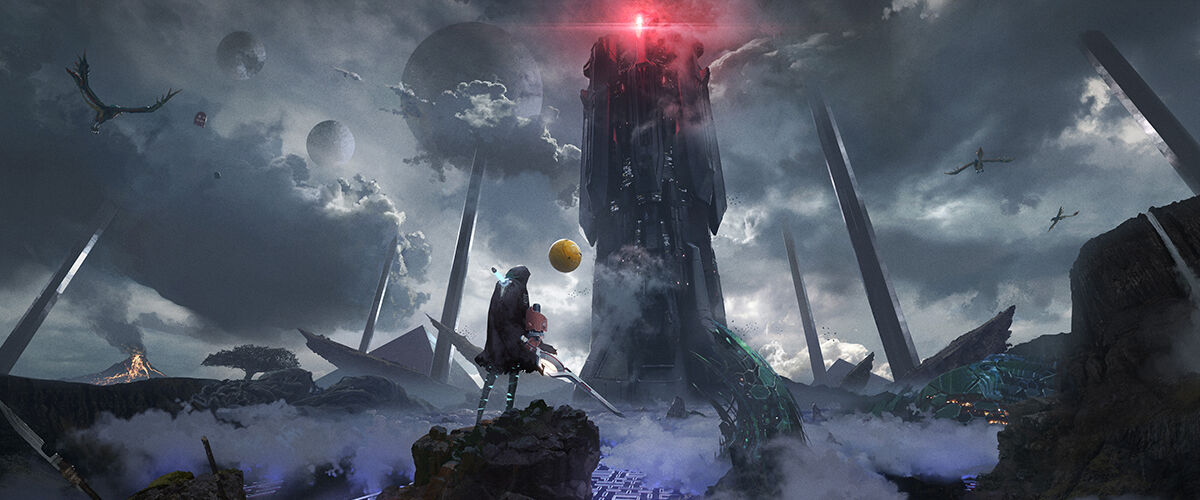
With over 45 games under its belt, one would think developer Bandai Namco has run out of ideas for the lovable yellow puck, now proudly adopted as its mascot. But that’s hardly the case, as the publisher is attempting the biggest Pac-Man transformation in celebration of its 45th anniversary, flipping the script on the until-now family-friendly character and his games. Enter Shadow Labyrinth, a gritty 2D sidescrolling action Metroidvania with the darkest themes ever in the Pac-Man franchise, and the most punishing entry to date.
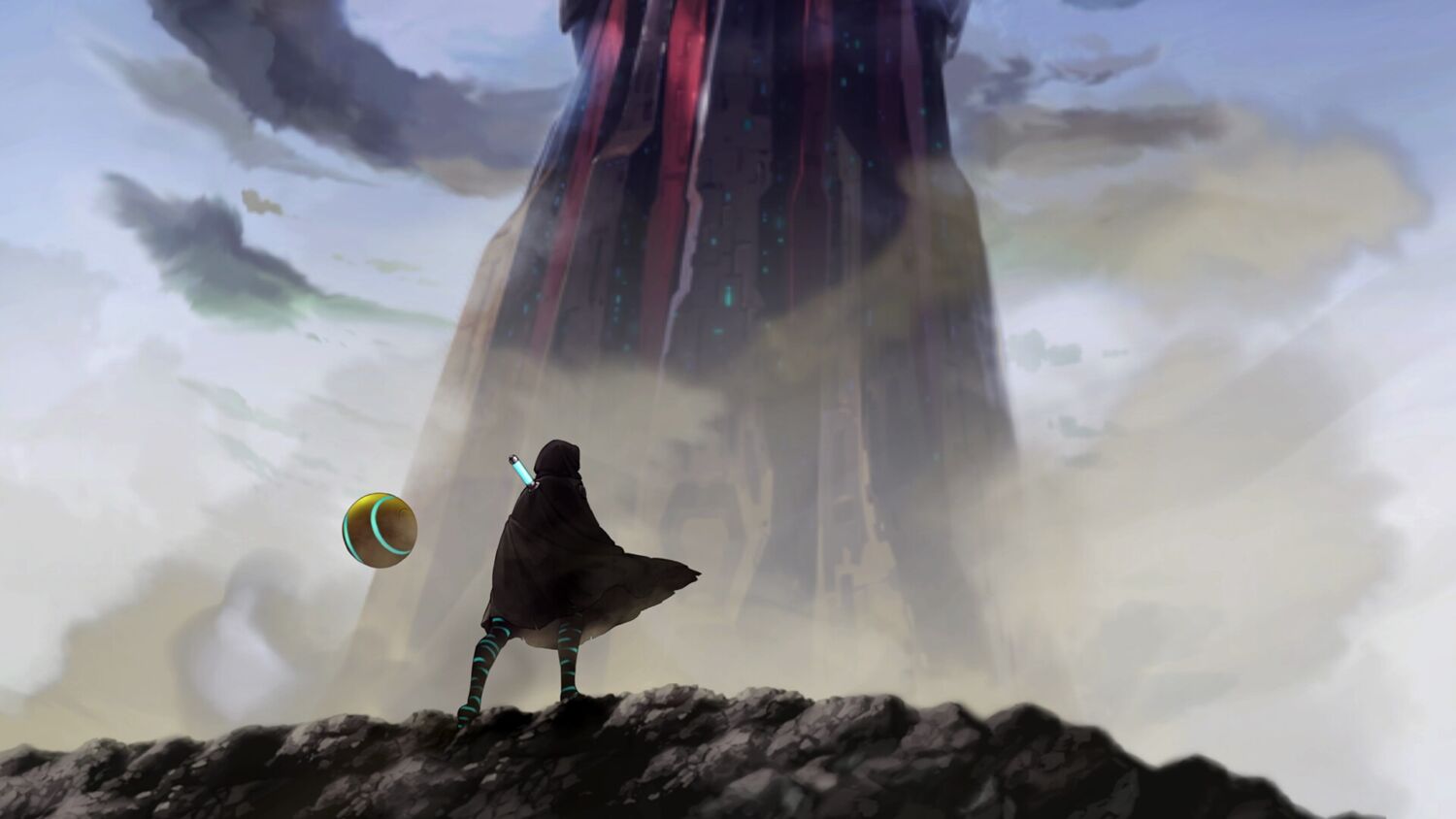
Serving as a sequel to PAC-MAN: Circle, the sixth episode of the 2024 Amazon Prime Video sci-fi gaming anthology series Secret Level, Shadow Labyrinth centres on an unnamed protagonist simply given the title Swordsman No. 8, who awakens on a mysterious planet and encounters a familiar sentient floating yellow sphere, Puck. Having been stranded for decades, Puck summoned No. 8 into the world – her eighth try, to be exact – to defeat an all-powerful AI bent on dominating the galaxy, thrusting the duo into a globe-trotting adventure filled with danger around every corner.

While the plot may seem simple on the surface, the devil truly lies in the details, with the title celebrating Bandai Namco’s rich history by being set within its UGSF (The United Galaxy Space Force) in-universe timeline, which strings the narratives of the studio’s classic sci-fi arcade games such as 1981’s Bosconian, 1982’s Dig Dug, and 1991’s Starblade together. A clear love letter to fans, the title is filled with everything from passing references to extreme deep cuts.
The unintended consequence of this is that its narrative might alienate the general and much younger audience, and can even sometimes delve into confusing territory. For one, there is an almost complete lack of voice acting, barring a select few cutscenes spread out sporadically, with the game instead presenting its story via the Japanese role-playing game trope of character grunts accompanied by lines of text. No. 8 also never says a word, and although this has a logical explanation, his inability to argue and simply follow Puck’s every order limits the potential for a back-and-forth between the two, which could go a long way in character development.

For those unfamiliar with the UGSF, the game’s constant barrage of unfamiliar terms can soon dampen the experience, as it expects players to understand its many complex subject and topics without explanation. Shadow Labyrinth is unapologetically built for the most diehard fans, something that, for better or for worse, extends to its core gameplay as well.
As a 2D side-scrolling action platformer, its core gameplay concepts and controls will immediately feel familiar to players experienced in similar titles like Hollow Knight (2017) and Ender Lilies: Quietus of the Knights (2021). What sets Shadow Labyrinth apart from other games in the genre is its integration of elements from Pac-Man, specifically how it adapts the classic arcade game’s maze and eating themes.

As a game designed in the Metroidvania format, No. 8 and Puck travel across multiple sprawling biomes throughout their journey, each providing opportunities for free-form exploration and hack-and-slash combat. Following Pac-Man’s themes of maze, each of its different biomes is further split into smaller interconnected zones, a literal maze of winding paths that may or may not be accessible to the player at any given point in time, due to the genre’s design that encourages backtracking after gaining new skills to open up new areas.
Platforming doesn’t simply consist of running or jumping, either, as No. 8 will gain multiple traversal skills gradually over his journey, which play a big part in the game’s platforming challenges, with the two main special abilities being ACTIV shot and Mini-Puck mode.

The former, which is essentially a grappling hook, may seem like something that’s been done countless times, but not in its execution here. Players still have designated points within the environment to grapple towards, but unlike most games where the system is largely automated, here, everything is manual and dictated by input or direction. As a result, players have to manually control the direction from which the grapple shoots, and once they reach the grapple point, the subsequent distance and angle will also affect the speed and trajectory thereafter, allowing them to feel more involved in the platforming.
Mini-Puck mode, meanwhile, provides a unique way of traversal with direct references to its Pac-Man inspiration. At set points on the map, No. 8 will encounter rails that can be activated via a stone tablet, and when he does so, the pair can combine into a Mini-Puck, a yellow circle identical to the original Pac-Man, who can then ride the rail just like in the original arcade games, even featuring pellets to munch on, complete with the iconic wakka wakka sound effect.
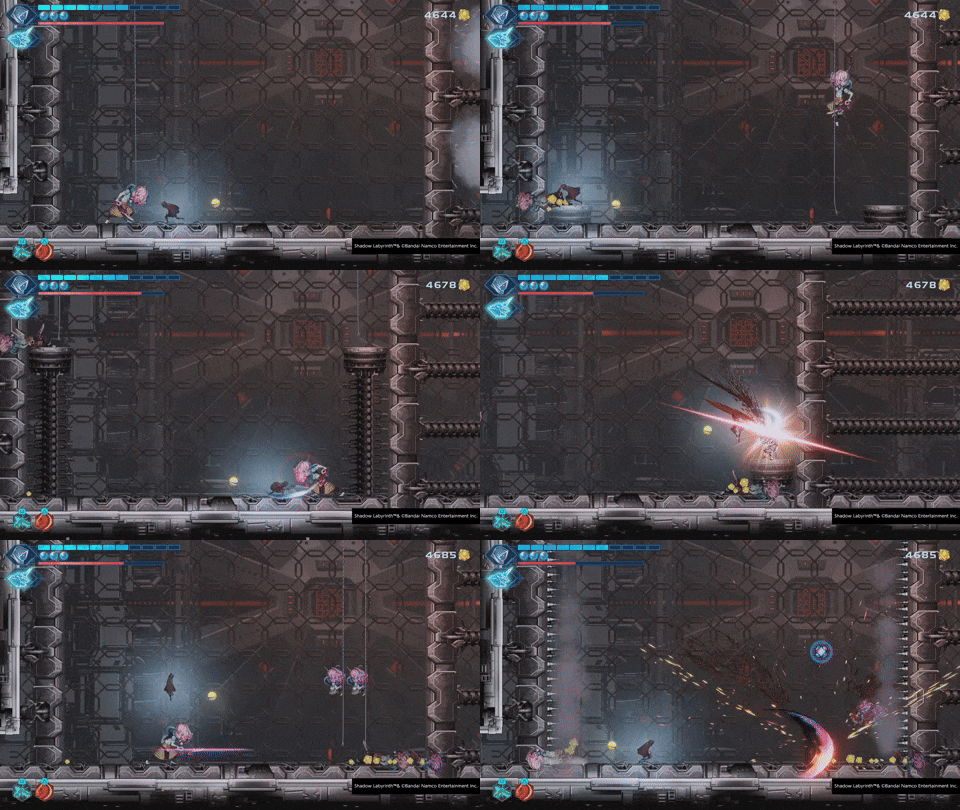
Combat-wise, Shadow Labyrinth starts with a rather basic moveset, comprising a simple three-hit combo, but as it progresses, No. 8 and Puck will gain a host of special abilities, including a timing-based parry, a throwable mine, and a skill that fires Puck forward like a missile. Tying combat together is the duo’s ultimate form, a massive mech known as GAIA, which can not only turn the tides of battle temporarily when activated, but can also be used to gain resources, which directly correlates to Pac-Man’s other core concept, eat.
After defeating any foe, apart from them dropping Ora, the game’s currency, their slain caracasses will be left on the ground for a limited amount of time. Using the Devour ability within this window, which absorbs the fallen foe and gains valuable resources that can be used to purchase equippable perks, unlocks all manner of enhancements like improved skill damage or increasing the range of the grapple.
It cannot be abused however, as alongside combat skills and dodges, these all drain the player’s ESP bar, or a mana gauge. This meter refills slowly, and if completely depleted, will disable No. 8 from using any such skills for a rather lengthy amount of time, making skill management especially important.

It’s not just basic foes that can be devoured. No. 8 will be able to use this skill on the game’s many boss encounters as well, with Puck fusing with him to form a giant dark variant that swiftly gobbles even larger boss carcasses in one go, earning him a new major ability for his efforts.
The type of skill received is dependent on the boss’ movement, however. A giant jumping frog, for instance, rewards No. 8 with the double jump technique, while a Loss Ness monster-esque turtle creature grants GAIA the ability to use its laser breath. Skills acquired from bosses generally add to the No. 8’s arsenal of traversal moves and open up previously inaccessible locations, forming Shadow Labyrinth’s core gameplay loop of exploring new areas to reach its major boss, earning a new ability, and enabling access to the next new biome.

On the surface, these systems seem like a pretty engaging experience, but there’s an aspect that some may find daunting or even a hard sell – mechanically-difficult gameplay, which extends to all aspects of its design. From a platforming and exploration standpoint, Shadow Labyrinth is completely void of any objective markers often highlighted in modern platformers. This is a title that doesn’t just encourage player agency; instead, it outright demands it, leaving it up to the player to place their own waypoints on the map (of which they only have a limited number) and forge their own journey, with getting lost or venturing to an area they shouldn’t be in yet being part and parcel of the experience.
And while exploration difficulty can admittedly be subjective, the game’s backtracking is undeniably frustrating due to a head-scratching design choice. Like its Metroidvania counterparts, there are checkpoints strewn across the map that allow players to save their progress and recover health, but unlike those, the title splits them into two different types – larger ones known as Miku Sol and smaller ones simply called checkpoints. Interacting with the latter lets players save and replenish their health – something the former can do, too, plus the refilling of limited HP Tanks (health potions), upgrading No. 8 and equipping perks and skills.

The issue here lies in which of the two can be used in the game’s fast travel system. All of those are only available at the larger Miku Sols, and while each area is often littered with small checkpoints, most will only feature two or three Miku Sols that are extremely spread out, so the player must often travel a needlessly long distance when trying to backtrack to a specific location, making it a chore to trawl through the same locations multiple times. It would have made more sense to allow players to fast travel to both types of checkpoints, making exploring previous locations much less of a slog.
It’s clear, then, that Shadow Labyrinth was designed with a much more hardcore target audience in mind, especially considering its combat difficulty. This isn’t quite on the same scale as FromSoftware’s Dark Souls franchise, where even the weakest minion can kill players in three hits, but rather due to its extremely strict margin for error. Enemies, and especially bosses, will often dart around the screen in quick succession, and since coming in contact with their bodies damages the Swordsman, taking damage can feel cheap in some instances.
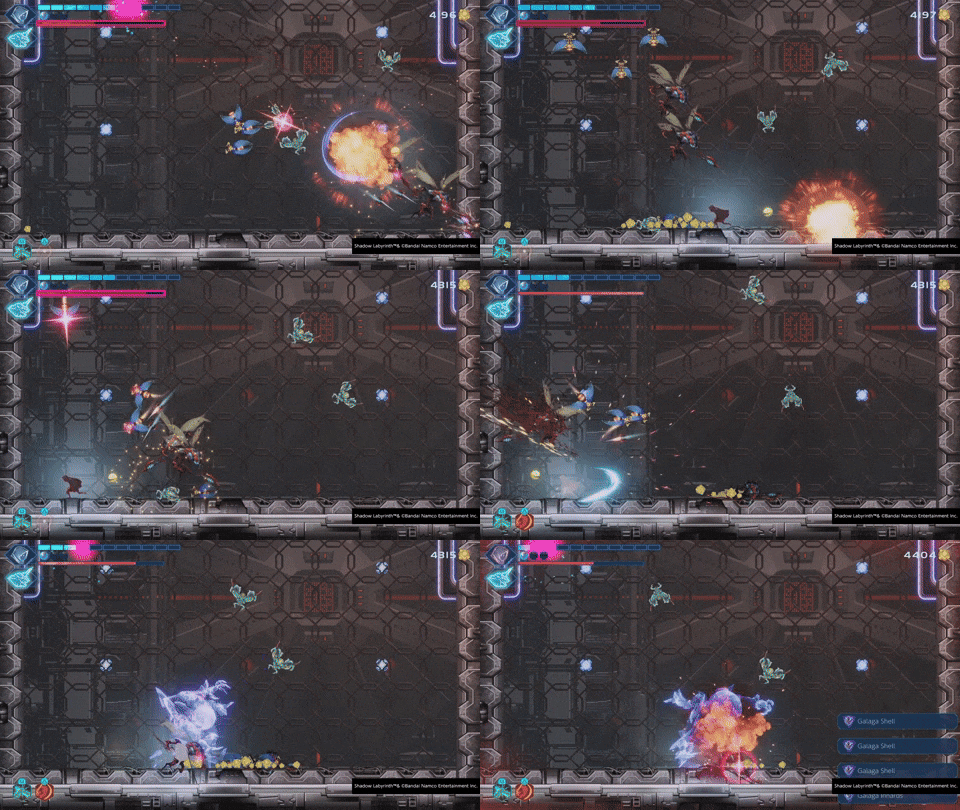
The high barrier to entry is further exacerbated by the sheer number of moves players will need to juggle when tackling some of the game’s major bosses. Taking the previously mentioned frog boss as an example, where the constant hopping around the arena, alongside the spewing of icicles that prevent player movements, requires players to rely on the various grapple points in the area for mid-air combat, and it’s no easy feat. Apart from jumping, aiming their grapple shots to maintain airtime and taking care not to launch straight into the boss mid-air, there’s also the balancing act of strategically taking pot-shots at the foe and avoiding his attacks with mid-air dodges, which can only be used one time per jump and forces players to return to the dangerous icy ground to refill the skill.
For lack of a better word, the entire fight is a mess of button presses and panic-induced mis-clicks that can result in many game overs before the eventual victory – and even then, it still feels like pure luck. It should be noted that this is but one example, with boss fights getting increasingly more difficult as the game progresses, requiring much more complicated move combinations.

The game’s strict health potion system doesn’t help, either, as some difficult fights are preceded by small checkpoints, which only refill health and not potion count, so players will have to travel much further back to refill their stock, and then take extra care to avoid using them on their return journey. Here’s the kicker – if they fail in their subsequent attempt, they will have to do it all over again.
The above points might excite some players, and potentially become a big selling point for the title, but not everyone is as capable of remembering and juggling multiple button combinations in the heat of the moment. Coupled with an absence of any difficulty settings, or rather, a complete lack of any accessibility options whatsoever, Shadow Labyrinth seems to be catered to only the most avid of platformer fans, which does seem counterintuitive considering the title is supposed to be a 45-year celebration of a prominent gaming figure known by fans of all skill levels.
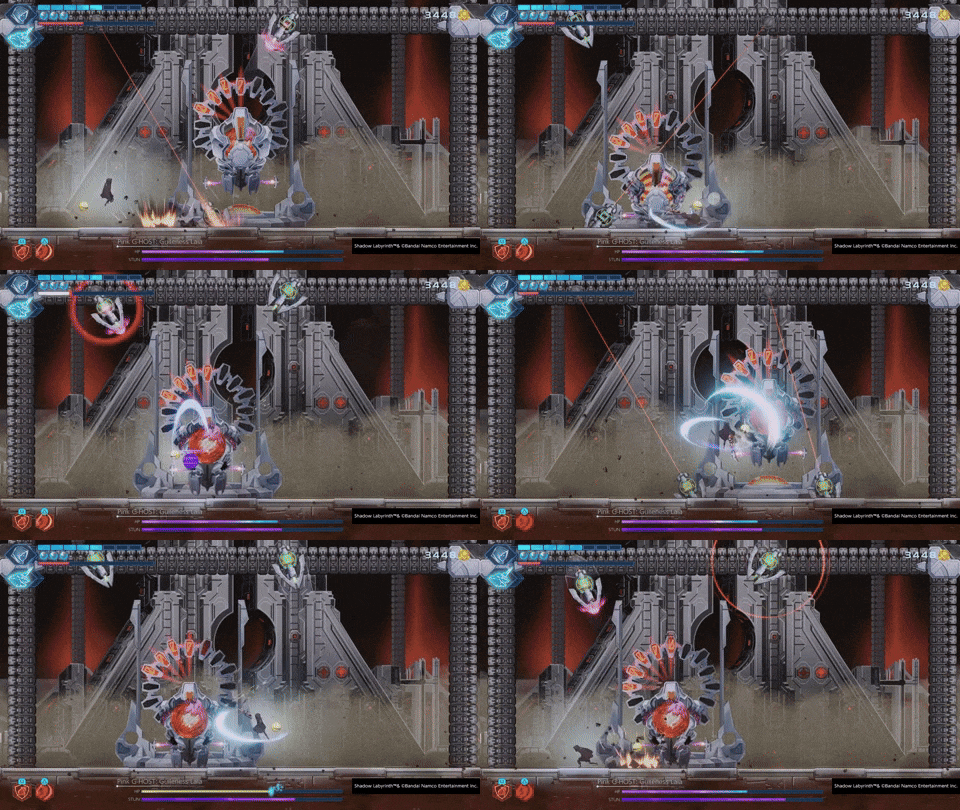
At least having such a dedicated target audience means the game can go all out in its world design, featuring a plethora of callbacks and references that will only be understood by fans of the UGSF saga, with enemies, characters, and even entire level designs being based on classic Bandai sci-fi games, once again cementing the title’s stance as a celebration of Pac-Man, but the studio as a whole.
Still, even with the fan service, the platformer cannot escape the echoes of a slightly low-budget product. The low-resolution textures of some of its environments are often a jarring immersion breaker, while some interactable objects, such as rocks or rope, don’t blend in seamlessly with the rest of the scene, making them feel like 2D flat images pasted haphazardly within the level. While it’s evident that a lot of love has been put into handcrafting the various environmental elements, they don’t always come together as well as what’s expected from a modern game release.

Shadow Labyrinth’s ambition to flip the Pac-Man tradition on its head and bring it to unexplored territory should be applauded, and to its credit, it does innovate on the Metroidvania genre with features that directly tie back to the franchise’s core concepts. However, those looking to venture forward into this darker version of the iconic yellow puck need to be clear on just what they are getting into, as this isn’t the same family-friendly adventure the franchise is known for. Instead, it’s an unforgiving thrill built only for those with immense experience in the genre, or lifelong fans of Pac-Man and Bandai’s sci-fi classics.
In other words, this is a closed-door, invite-only celebration of Pac-Man’s 45th birthday, not one that’s open to the general public.
GEEK REVIEW SCORE
Summary
The change Shadow Labyrinth makes to the classic Pac-Man formula might raise some eyebrows, but the game is built from the ground up for a specific target audience – fans of Bandai Namco’s extensive history of classic sci-fi arcade titles, and those looking for an unforgiving old-school metroidvania experience.
Overall
7.1/10-
Gameplay - 7/10
7/10
-
Story - 6.5/10
6.5/10
-
Presentation - 7/10
7/10
-
Value - 8/10
8/10
-
Geek Satisfaction - 7/10
7/10

Kevin is a reformed PC Master Race gamer with a penchant for franchise “duds” like Darksiders III and Dead Space 3. He has made it his life-long mission to play every single major game release – lest his wallet dies trying.
 Si Jia