
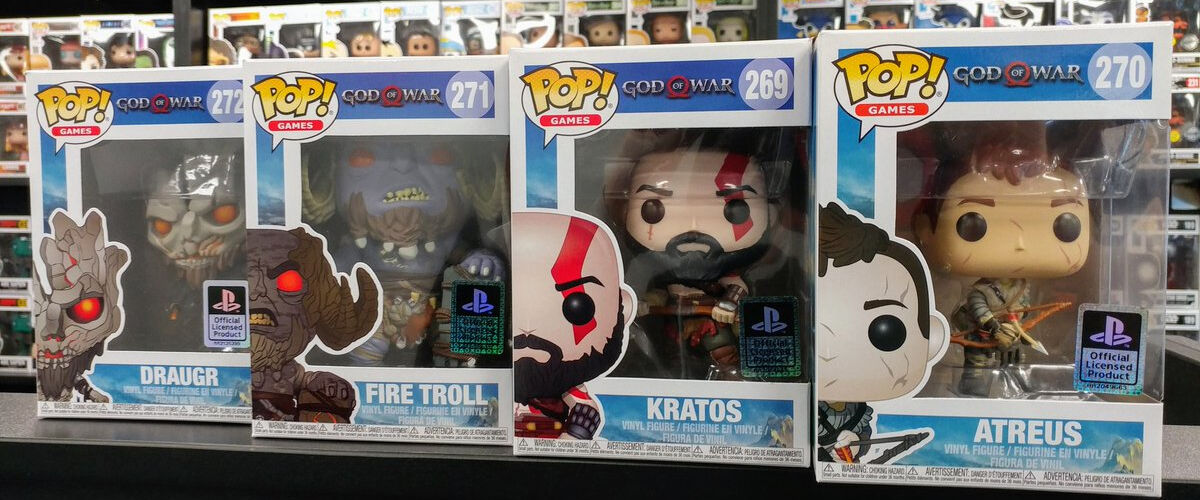
From selling bobble head figurines since its inception in 1998, to selling 1 billion of its well-known pop vinyl figures by September 2025, American toy company Funko is recognised as a modern success story among toy collectors and pop culture fans looking to own a piece of movies, TV shows, anime, manga, comic books and more, so it was a surprise when the company announced at a recent earnings call that the company has seen a steep drop in sales, and might not survive another year.
Much like the multitude of social media trends we see nowadays that explode on the scene and then slowly get forgotten and replaced by the inevitable next batch of brainrot, the world of toys and collectables has had its own fair share of crazes over the years, with companies hitting the jackpot with their latest innovations, only to fail at maintaining their audience’s interest as the times go by.
While today’s main form of entertainment undoubtedly comes from mobile phones, this wasn’t always the case, as back before the days of smart devices, kids and adult collectors alike had to rely on the latest toys and gizmos to keep themselves entertained, and companies knew this, creating all manner of plastic knick-knacks with the hopes that it would kick off a global sensation.
For some, this gamble pays off, as seen with the likes of Hasbro’s Transformers or Mattel’s Barbie or Masters of the Universe, served by additional content including animated series, video games and movies, or LEGO building blocks, which offer licensed sets from popular pop culture intellectual properties including Star Wars, Marvel Comics and DC Comics. Then there are the toys-of-the-moment – the ones that have a quick claim to fame but fail to capitalise on its hot reputation for long, before the toys fizzled out.

Current toy trends that seem to be on the same trajectory include the Labubu doll from Pop Mart, which has seen prices for its collectables fall in the secondary market, fueled by speculators who snap up the dolls in the hope of reselling them at a higher price.
Here are 11 toys that initially took the world by storm, only to fade into obscurity as the years went by. While some of these toys are still around, they are a pale shadow of their former selves, but given the cycle of recycle, we expect that some of these lines to get revived eventually.
Sea-Monkeys
Manufacturer: Transcience LLC and Sea-Monkeys USA
First release: 1960
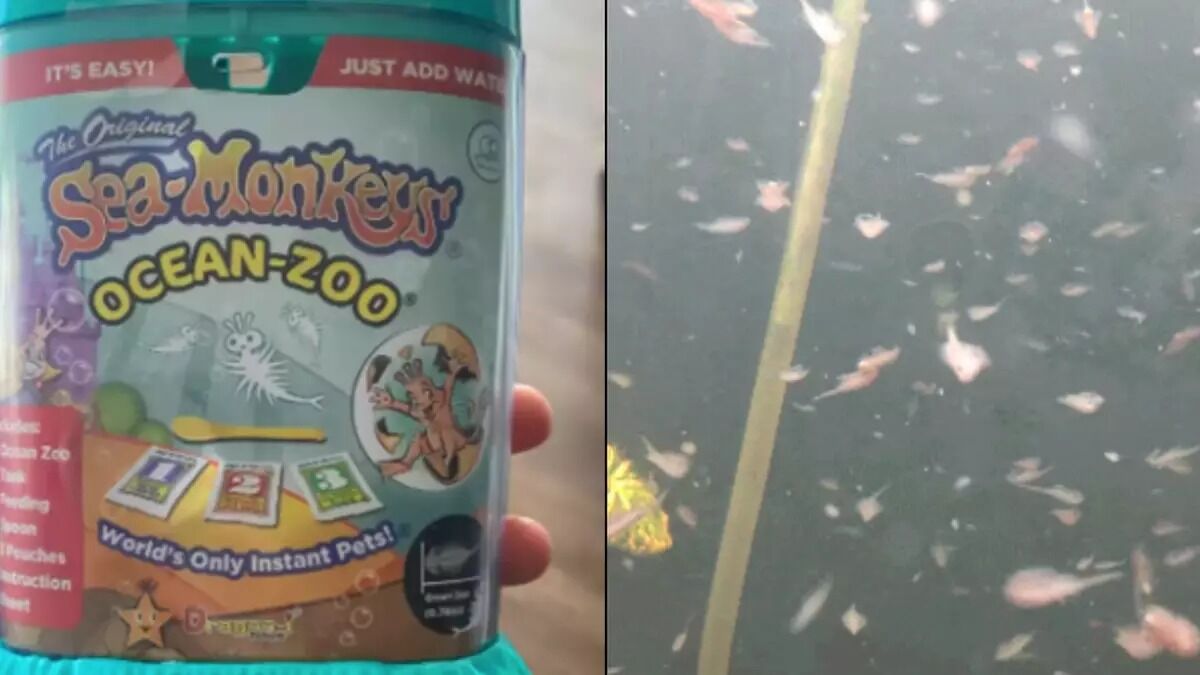
Sea-Monkeys are probably the most novel of all the toys in this list, due to the fact that they could hardly be described as toys at all. Instead, these are actually living organisms known as brine shrimps, sold in packets of eggs alongside often intricately designed mini aquariums. Buyers simply needed to add water to hatch the eggs for an instant, low-maintenance novelty pet.
Interestingly, the product didn’t immediately gain worldwide recognition when it launched, but rather became a cultural icon due to its ads being printed on the back of millions of comic books, famously picturing the critters as mermaid-like humanoid creatures living in grand underwater palaces, sparking kids’ imaginations and soon became a staple in the toy industry between the 1970s to 1990s. Sea-Monkeys also offered the unique selling proposition of not just selling kids an entertaining novelty “toy”, but also teaching them the valuable life lesson of basic animal care.
Today, Sea-Monkeys are still being sold in some major toy chains like Toys ”R” Us, itself a toy icon that died and came back under new management, although with the rise of smart toys and high-tech interactive gadgets, owning a “toy” you actually have to care for no longer holds the same appeal.
Cabbage Patch Kids
Manufacturer: Coleco Industries
First release: 1982
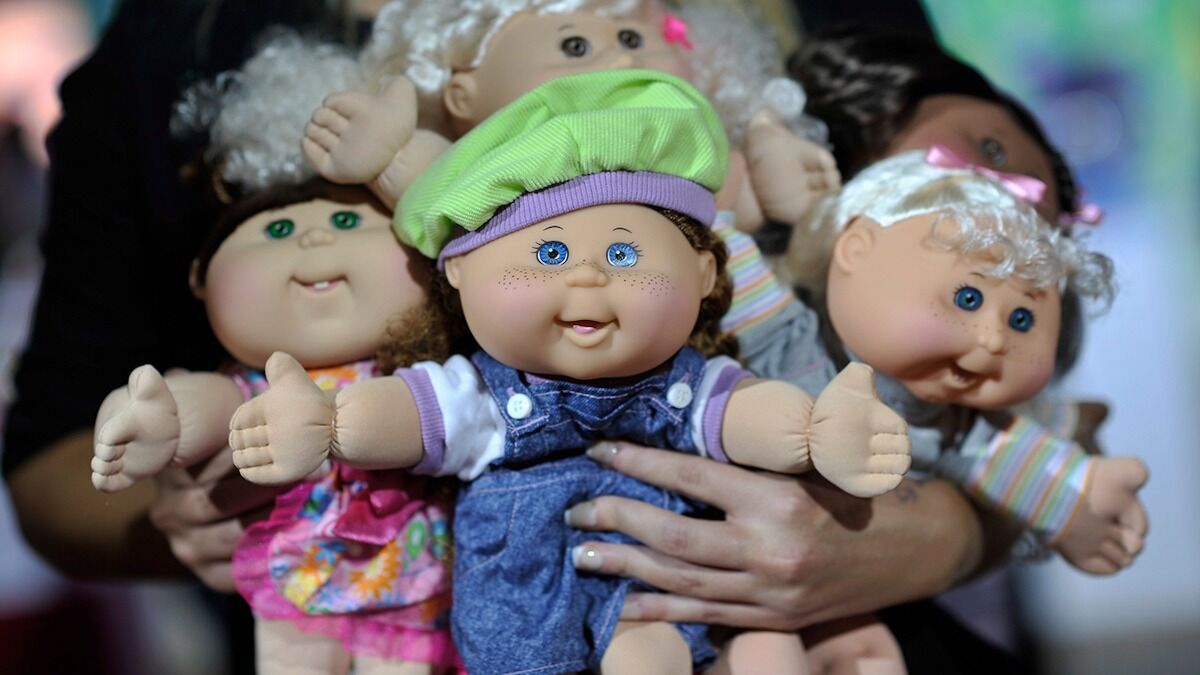
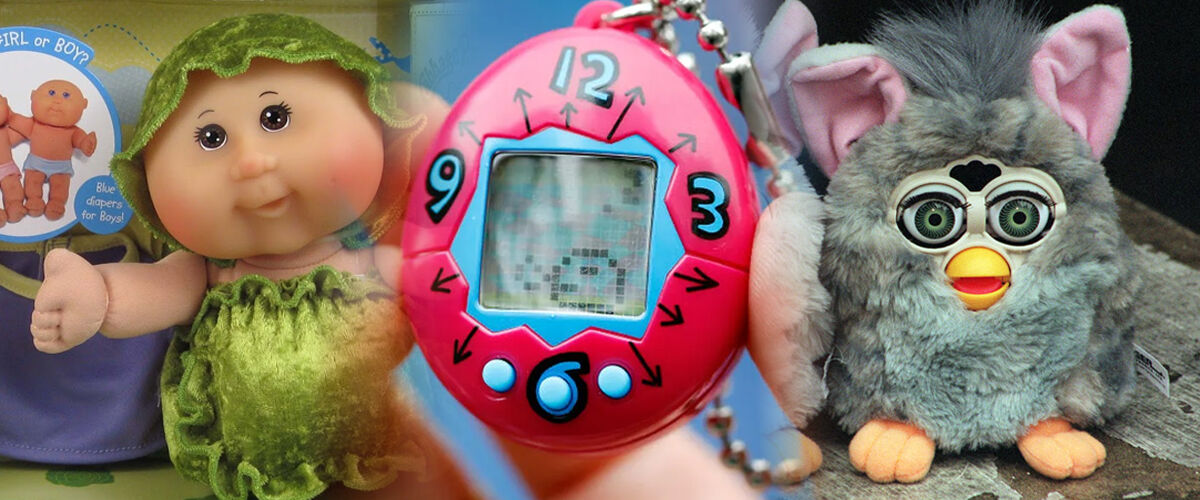
As one of the longest-running doll franchises, Cabbage Patch Kids is a line of cloth dolls with plastic heads inspired by Xavier Roberts’ “The Little People” soft sculptured dolls, and even came with their own fantasy backstory, where creatures known as BunnyBees would pollinate special cabbages using magical crystals, “giving birth” to the dolls. Each doll also came with birth certificates and adoption papers, adding to the fantasy that owners were adopting the characters instead of just buying toys.
The doll brand set every toy industry sales record for three years running, and was one of the most popular lines of children’s licensed products in the 1980s. Their popularity was so immense that it even gave rise to the Cabbage Patch riots in 1983, where customers attacked each other, sometimes with weapons like baseball bats, all to obtain a doll for their children, which were limited in stock.
Today, the Cabbage Patch Kids remain one of the most iconic toy lines, with the toys even being inducted into the National Toy Hall of Fame in 2023, although, at least compared to the 1980s craze, their peak popularity has certainly passed.
Beanie Babies
Manufacturer: Ty Inc.
First release: 1993
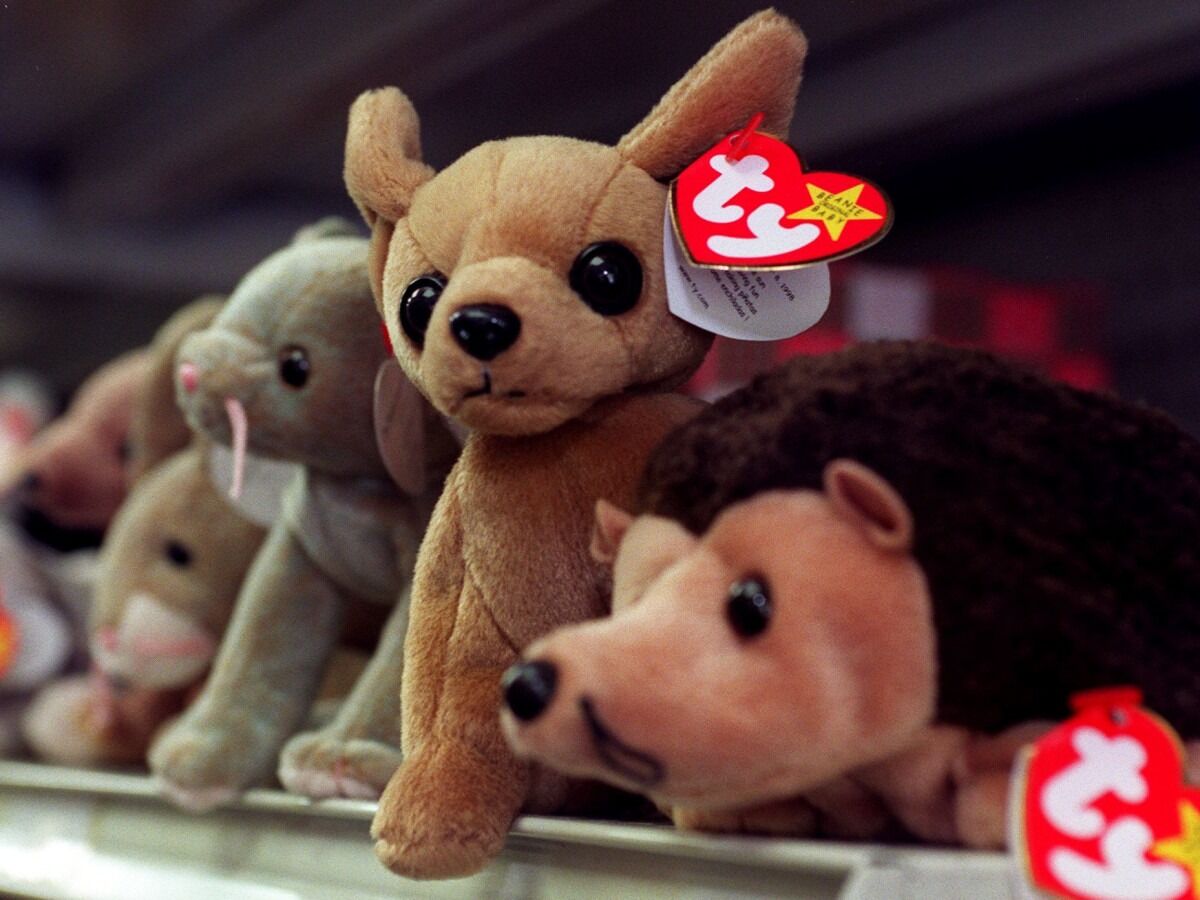
Often referred to as the world’s first internet sensation, Beanie Babies are a line of stuffed toys most recognised by their heart-shaped tag featuring the logo of manufacturer Ty Inc. These toys were stuffed with plastic pellets (“beans”) rather than conventional soft stuffing and came in many different animal forms. Unlike other soft toys from the time, Beanie Babies were also deliberately under-stuffed, allowing for greater posability and making them seem more realistic.
While nothing special from your everyday stuffed animal, Beanie Babies’ popularity exploded in late 1995 due to the company’s genius strategy of deliberate scarcity, producing each new design in limited quantities and retiring designs regularly, leading to a surge in sales and starting a trend where buyers would collect and resell them at inflated prices.
Like any fad, this success eventually waned, and despite the brand’s efforts to replicate it with the launch of offshoots like Beanie Boo’s, which are still being sold today, these adorable little critters are nowhere near as sought after or relevant as they used to be.
B-Daman
Manufacturer: Takara-Tomy
First release: 1993
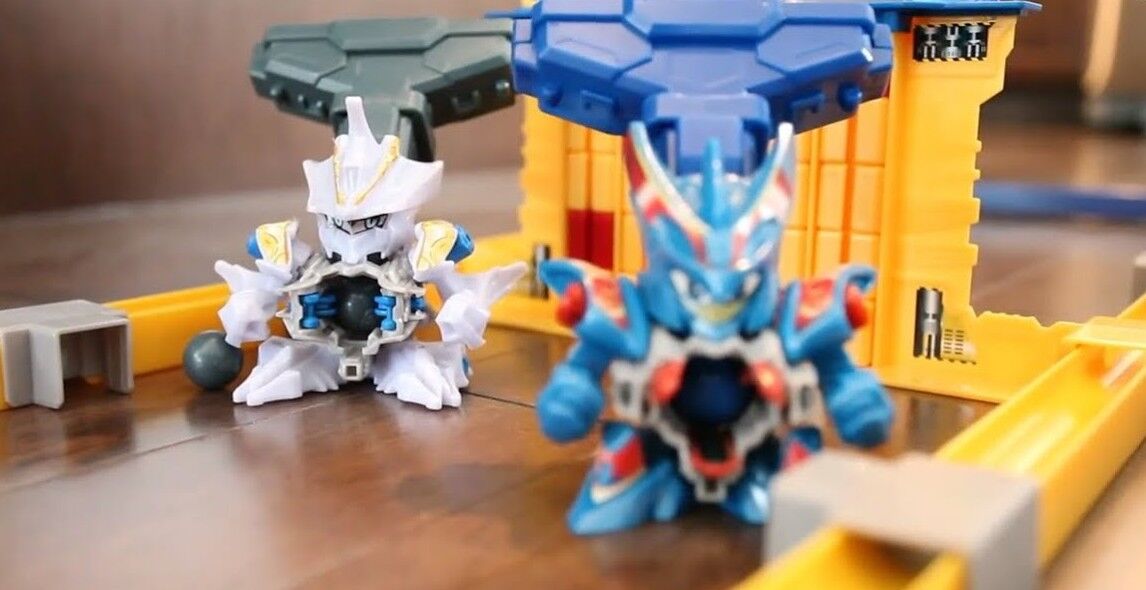
Inspired by the iconic Bomberman series, Takara’s B-Daman took the marble shooting concept to new heights when it launched in 1993 with a simple yet effective addition, customisation. Just like Bomberman, these humanoid figurines featured a round cavity in their abdomen that houses a marble, which can be launched via a spring-loaded trigger on their back, but takes playability to the next level with the ability to outfit figures with attachments and accessories.
What’s more, these attachments served more than just cosmetics, some were able to change the figure’s effectiveness, such as trigger kits featuring a larger or longer spring, making shots more powerful. Coupled with bundles that included multiple B-Daman and even custom arenas with extra targets for multiplayer possibilities, the toys were an immediate hit, spawning not just animated shows like 1998’s Bomberman B-Daman Bakugaiden, but also seven generations of toylines from the 90s to 2013, such as Battle B-Daman and Cross Fight B-Daman.
Despite its best efforts to revitalise the marble shooting figures with each generation, B-Daman’s low-tech concept ultimately couldn’t stand the test of time, with Cross Fight B-Daman (2011-2013) being the toy franchise’s final attempt before it vanished from relevance completely.
Furby
Manufacturer: Tiger Electronics, Hasbro
First release: 1998
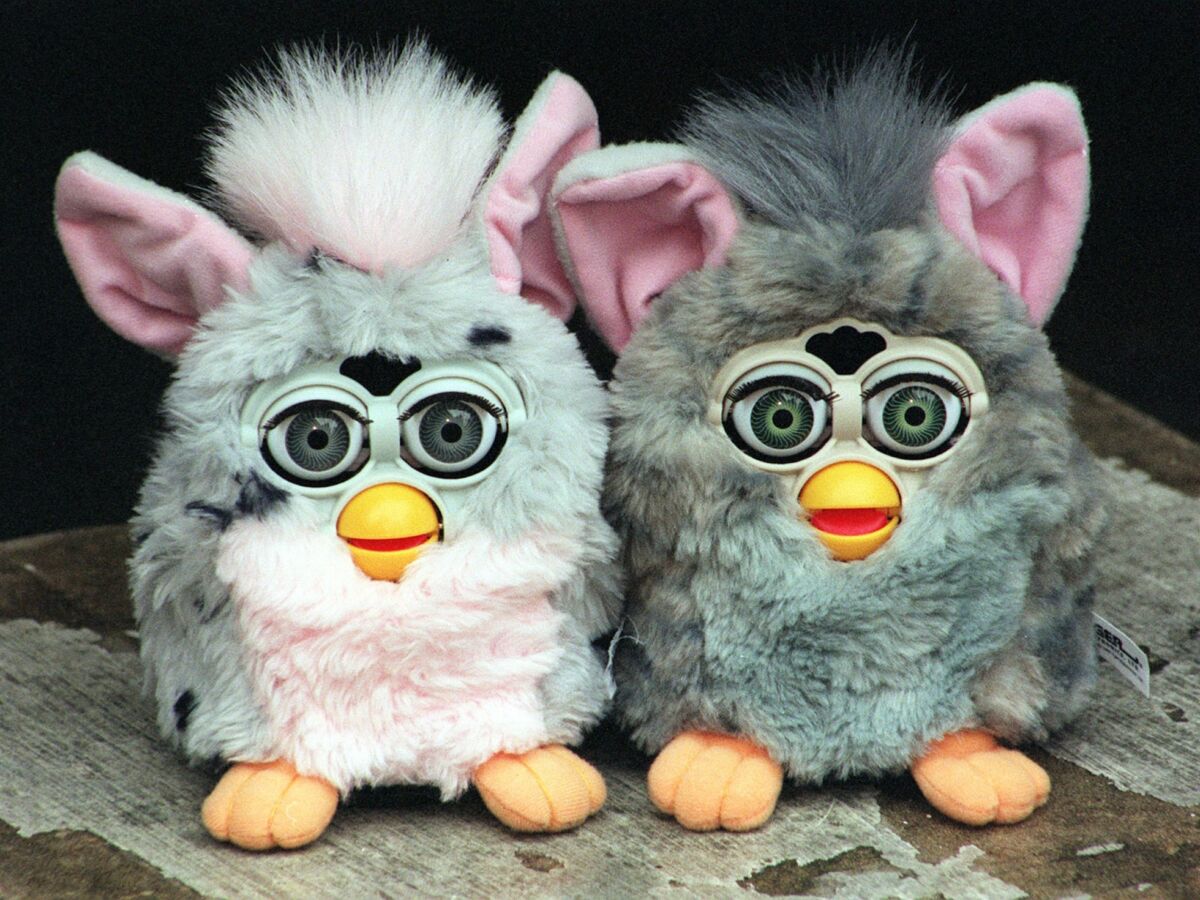
Now this is one toy that has thankfully never caught on in the modern age. Launched in 1998, the mechanical monstrosities were marketed as a toy that could combine robotics and personality, with the creepy sugar glider-like creature outfitted with sensors for touch, sound, and motion, even able to “speak” on its own using a language called Furbish.
Despite their massive, dead eyes and overall eerie look, these toys somehow rose to popularity in the late 1990s, selling over 40 million units worldwide within the first three years of launch. Unsurprisingly, due to their ability to react to sounds, Furbies even sparked the Spy Toy Controversy, where the National Security Agency (NSA) banned the toy from its offices, fearing that they could record conversations, with the incident becoming a well-known example of the early tech panic surrounding smart toys.
By the early 2000s, interest in Furbies had declined, although the franchise did inspire a multitude of memes and horror stories online due to their eerie ability to react to their surroundings. In recent years, the brand has seen many reboots, often incorporating increasingly complex technologies like LCD eyes, which thankfully made them less creepy, and the ability to control them via smartphones, but in all, this is one toy brand that should just be left in the past, or a landfill, either is fine.
Heelys
Manufacturer: Heelys Inc.
First release: 2000
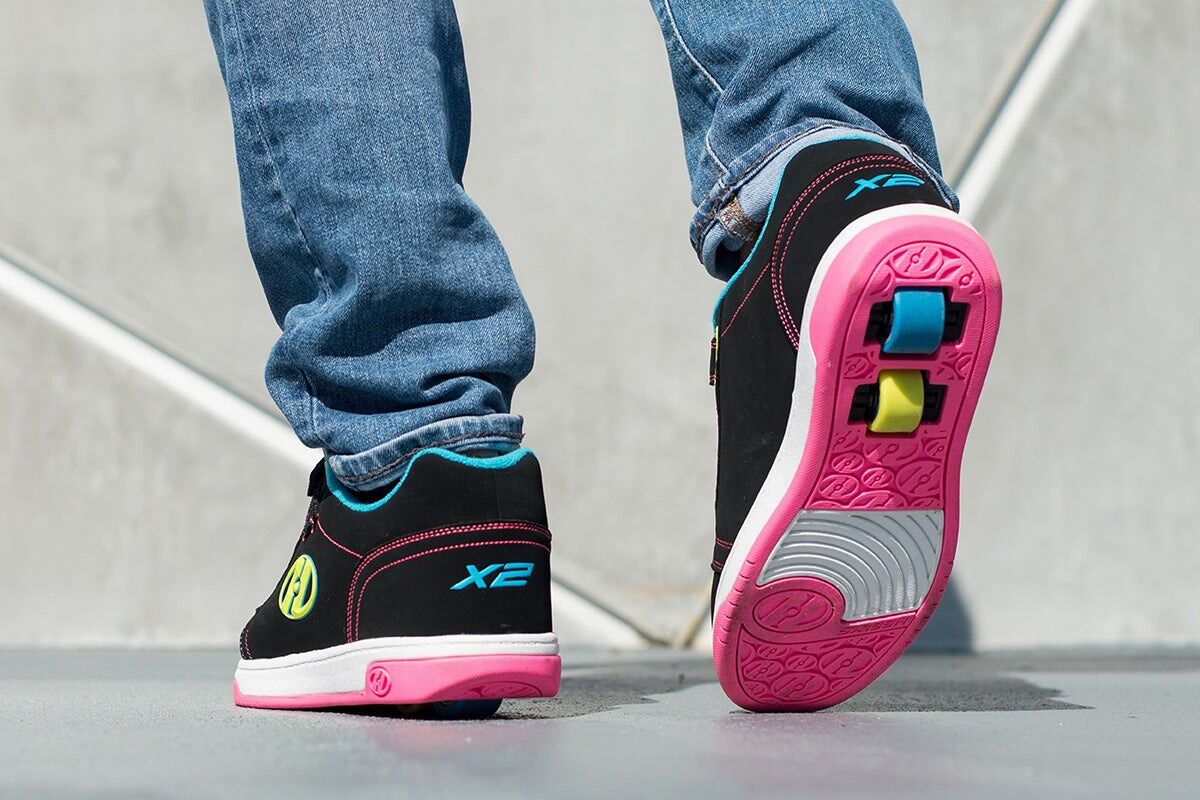
What if you could walk… but faster? Those who grew up in the early 2000s would surely recognise these wheeled shoes that, while technically not a toy, became a cultural icon among kids and teens by enabling them to effortlessly slide along the ground, undoubtedly looking really cool while doing so.
It was this very “cool factor” that propelled the shoes to global popularity, as kids no longer needed to buy bulky skateboards to perform tricks and show off to their friends, with Heelys becoming a must-have holiday gift by 2007. This craze didn’t last, however, as safety concerns started to be raised by the late 2000s, with some malls, schools and even airports banning the products due to the risks they came with, and sales started to decline.
By 2012, hype faded significantly, with the shoes only maintaining relevance today due to their nostalgic appeal.
Mighty Beanz
Manufacturer: Moose Toys
First release: 2002

Who knew that tiny little bean-shaped toys could cause such a global phenomenon, but that was exactly what Moose Toys achieved with the Mighty Beanz, which spread like wildfire when they were launched in 2002. Each “Bean” was fitted with a weighted metal ball within, allowing them to wobble, roll and flip in unpredictable ways, with each also designed with a cartoonish and often humorous depiction of anything from animals to iconic Marvel characters or even famous people like Steve Irwin or Elvis Presley.
In addition to releasing five main series of Beanz, Moose Toys also launched a selection of rare, limited-edition Beanz like Albino Bean or Medusa Bean. Since the Beanz were sold in blind packs, it quickly surged in popularity as collectors rushed to snag up precious rare variants, fueling the collecting craze between 2003 to 2005.
Over the years that followed, Moose Toys tried to keep the momentum going by introducing modern revivals of the franchise, with the latest being in 2019, but could never quite reach the heights of its initial success.
Crush Gear
Manufacturer: Bandai
First release: 2001

Who doesn’t love ramming toy cars into one another? Crush Gear, a toy line manufactured by Bandai, leveraged this very concept, comprised of spinning motorised battle vehicles named Gears that could be customised with drills, blades, armour and other weaponry to ram into opponents within an arena.
A staple of early 2000s anime toy culture, particularly in Southeast Asia, Crush Gear rose to fame in the model-building community for its more visceral battle mechanics compared to other similar toys of the time, like Beyblade or Tamiya car racing. The toy even spawned two anime adaptations, Crush Gear Turbo (2001) and Crush Gear Nitro (2003).
By the mid-2000s, the franchise faded as toy sales began to decline, although it has still managed to retain a loyal but niche following in some regions, particularly in Indonesia, where tournaments are still held.
Bakugan
Manufacturer: Spin Master
First release: 2006

Ask any kid who grew up playing trading card games like Pokémon or Yu-Gi-Oh! what was one thing they wished the game would provide, and chances are, they’ll tell you it’s the ability for the monsters to somehow come to life when they play like the anime, instead of having to use their imaginations. This was exactly what made Spin Master’s Bakugan toyline so intriguing to begin with, as it provided this very prospect.
Based on the Bakugan Battle Brawlers anime series by TMS Entertainment, the toy line featured ball-shaped figurines alongside metal trading cards, and what made them so special where the figures’ ability to transform from a ball into monsters using magnets, with players needing to roll the balls on the cards for the magnet to activate, essentially bringing the beast on the cards to life.
Between 2006 to 2013, these little transforming balls were all the rage, with the franchise even undergoing two relaunches in 2015 and 2023 to shake up its line-up, introducing gimmicks along the way like larger, more complex figures and even some that combined to form a giant beast, but it seems efforts were all in vain, as the series was officially cancelled in 2024.
Tamagotchi
Manufacturer: Bandai
First release: 1996

Less a toy and more of a digital pet that owners cultivate as a simulation, a Tamagotchi is a small egg-shaped handheld video game with three buttons, and the goal is to raise the pet as it goes through different life stages. Owners could clean, feed and play with their Tamagotchi using the buttons, and these actions would determine the growth of the creature that they could name.
The name itself is a portmanteau of the Japanese word (たまご) tamago, which means ‘egg’, and (ウオッチ) uotchi or ‘watch’, as the original product was worn on the wrist, like a watch. Bandai never imagined that the product, originally targeted to females, would catch on, and it even led to the introduction of the Digital Monster, a male counterpart that could do battle and was targeted at boys. This ultimately led to the creation of the Digimon media franchise.
The fad led to many clones, and its popularity waned in 1998. Bandai revived the toy line in 2004, and while it continues to have a fanbase, it never retained the cultural impact it achieved at the beginning.
Fidget Spinners
Manufacturer: Multiple
First release: 2014
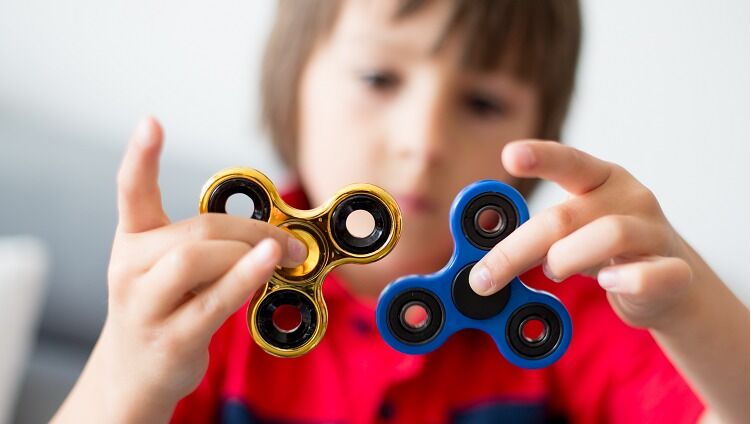
This one needs no introduction, as these three-pronged spinning toys rose to viral fame not too long ago in 2017. Tracing its roots back to the 1990s, the toy first began as an invention by Catherine Hettinger for her daughter to cope with ADHD, although her design looked rather different from the fidget spinners we know today, featuring a lightweight disc with looks reminiscent of a UFO that could be spun around a finger.
In late 2016, manufacturers began producing three-pronged fidget spinners made with ball bearings that allowed them to spin smoothly, marketed as a stress-relieving toy or a focus aid for people with ADHD or anxiety. By mid-2017, the spinners were literally everywhere, becoming a social media phenomenon and even giving rise to controversy, as schools started to ban them due to the toys causing distraction instead of aiding focus, with some experts even questioning the claims that they helped with ADHD or anxiety.
The fidget spinner craze would decline as sharply as it peaked by the end of 2017, although it still remains a symbol of 2010s pop culture, and inspired a broader range of fidget toys like fidget cubes or sensory rings, which some still use today as part of stress management.
Bonus: Pet Rock
Manufacturer: Gary Dahl
First release: 1975

As perhaps the most well-known example of fad products, the idea of pet rocks was created in 1975 by Gary Dahl after he realised that a joke he made to his friends about a rock being the perfect low-maintenance pet actually had potential. After sourcing smooth rocks from a supply yard in Mexico, Dahl launched the product that same year, which instantly became a massive hit due to its novelty.
The genius of pet rocks wasn’t the product itself, but rather how they came packaged, each including a cardboard “pet carrier” box with holes, a “nest” made of straw, and even a 32-page “training manual” filled with deadpan humour, like teaching your rock how to sit, stay or play dead. Fueled by media coverage and its understandably cheap price, the fad skyrocketed from late 1975 to early 1976, where Dahl reportedly earned over US$1 million within a matter of months.
Like any fad, pet rocks would completely disappear by early 1976 as the novelty wore off, but remain one of the world’s most successful joke products and are still used as case studies in marketing classes today, proving that it’s not what you are selling that is important, but how you sell them.

Kevin is a reformed PC Master Race gamer with a penchant for franchise “duds” like Darksiders III and Dead Space 3. He has made it his life-long mission to play every single major game release – lest his wallet dies trying.
 Natalie
 Yonk
Yonk