

[Snapdragon flew us out to San Diego for Snapdragon X Deep Dive Architecture 2025. All experiences were hosted, but no additional compensation was received.]
There’s no denying that artificial intelligence (AI) will drive the future of PC computing, but the current question is, which brand of chip will bring the industry closer to that goal? With AI set to become an integral part of the PC experience, the Neural Processing Unit (NPU) is now more important than ever, and chipmaker Qualcomm is banking on this with its second foray into developing a dedicated processor designed to accelerate AI and machine learning tasks: the Snapdragon X2 lineup of integrated chips.
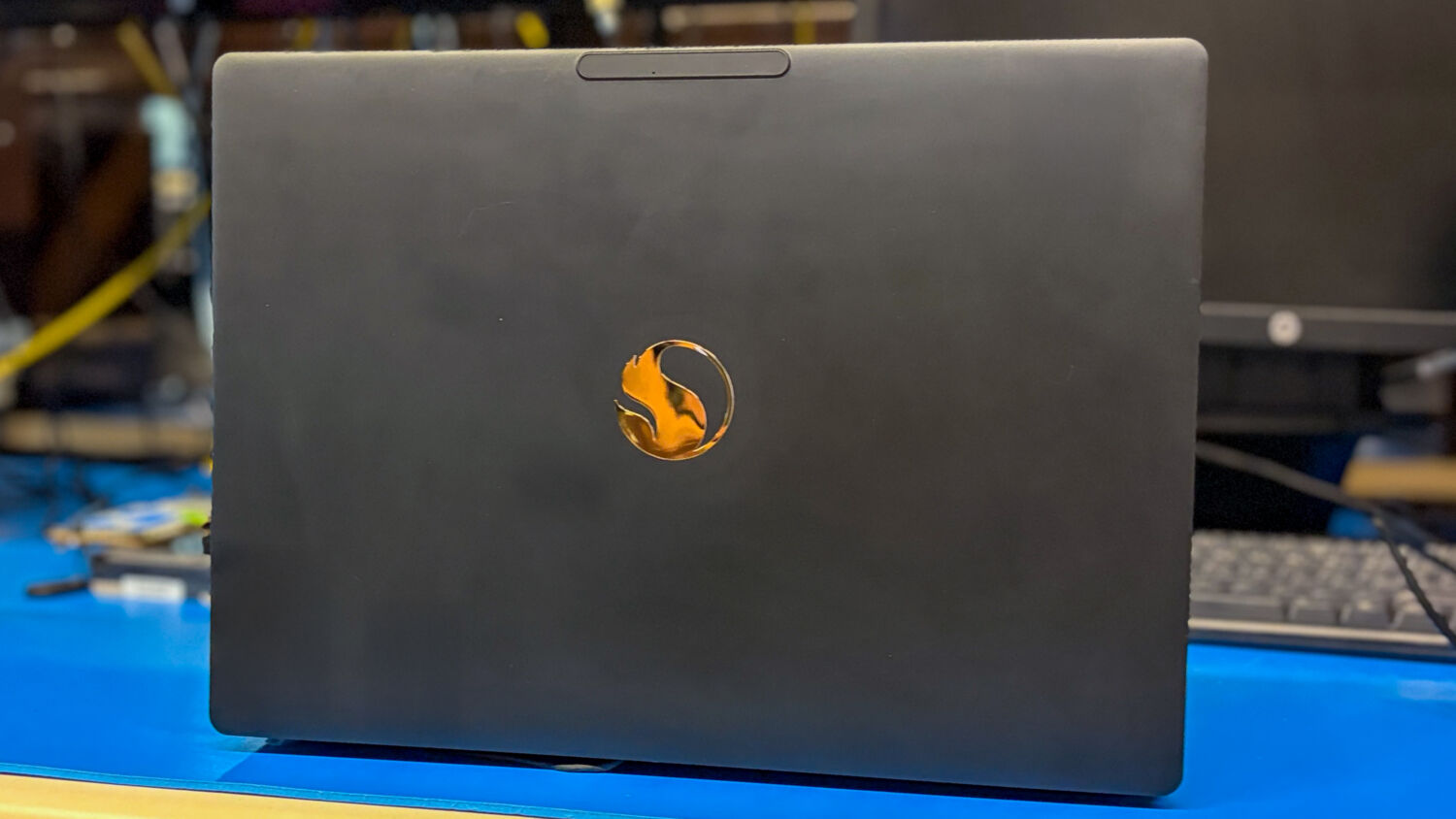
Announced during this year’s Snapdragon Summit, held in September in Hawaii, the new lineup featuring the X2 Elite and X2 Elite Extreme ships with an upgraded Adreno GPU and a new Hexagon NPU that delivers improved all-around performance, with up to 18 cores and 5.0 GHz boost speeds on the latter, primed to offer an edge over general-purpose CPUs, as AI workloads are executed with greater speed and power efficiency.
According to the company, this latest-generation NPU is capable of 80 TOPS of AI processing, surpassing the current high of 55 TOPS from AMD, which puts it as the world’s fastest laptop NPU for now. Numbers-wise, it’s expected to be 78 per cent faster than before, with a threefold increase in AI performance and efficiency compared to the competition. The Intel Core Ultra 9 285H (77 TOPS), for instance, obtained a score of 1,197 on Procyon AI, while the Snapdragon X2 Elite Extreme recorded 4,151, alongside a power efficiency score of 54.2 and 200.5, respectively – or so the claim goes.
The leap proves even more handy for agentic workloads, AI-driven processes where autonomous AI agents make decisions, take actions, and coordinate tasks with minimal human intervention, and other areas of content creation, collaboration, and productivity. Where its predecessor enabled a slate of applications, from Premiere Pro and Capcut to Zoom and Microsoft Teams, the Snapdragon X2 Series will introduce new AI-powered experiences to the list.
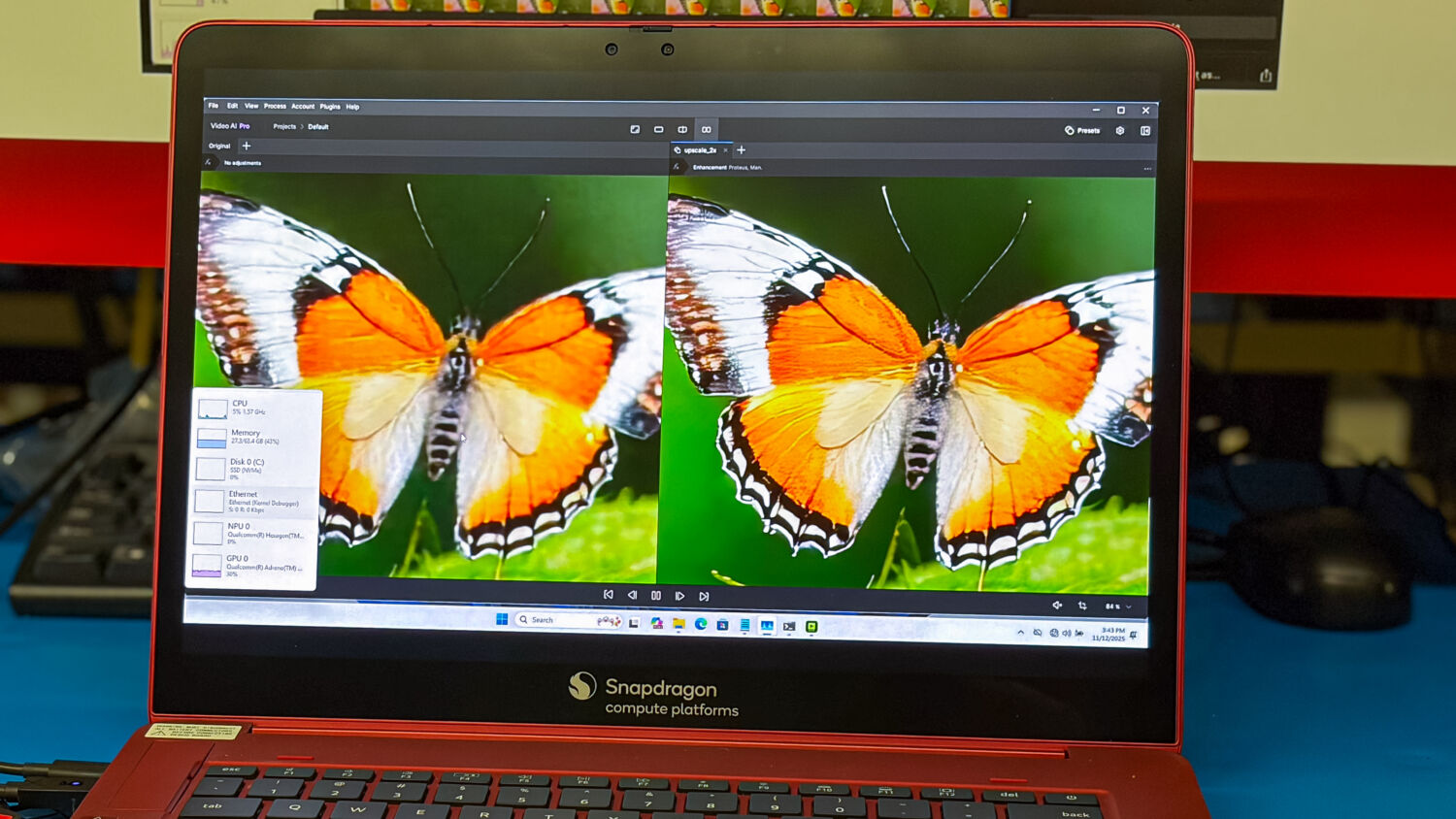
Alongside existing features like transcription, real-time translation, Generative Fill, Voice Separation, SEO Optimisation, and more across the various platforms, users can expect additional tools that include the following:
- Adobe Premiere Pro – Edit Video, Add Effect, Add new frames with AI
- Blender – 3D Modelling with Text to Image Generation
- Moises.AI – Instrument isolation
- Context – Agentic AI-Doc creation, Gen AI Productivity
- McAfee – Anti-Scam, Media Deepfakes
- Personal.AI – Agentic AI, Personal LLM
- Guidde – Video Tutorial with translations
- Bria – Advertisement, Trademark Gen AI
- VS Studio Code – Code Generation, Commenting
- Affinity Photo – Object and Subject Selection
Open-source software, such as Anything LLM and Nexa AI SDK, also stand to benefit from the 80 TOPS of processing power on the Snapdragon X2 Elite. Not only is performance set to improve twofold gen over gen on the former desktop app, its Mobile App will offload on-device RAG – or retrieval-augmented generation, a technique enabling large LLMs to extract and incorporate new information – and LLM inference to the Hexagon NPU.

Outside of the AI space, the Snapdragon X2 chips have more to offer. The 3rd Gen Qualcomm Oryon CPU touts 50 percent faster processing and 43 percent less power versus the previous generation, with the Areno X2 integrated GPU looking to elevate gaming experiences with up to 2.3 times increase in speed and 125 per cent more efficiency per watt. A faster memory of up to 228 GB/s bandwidth, improved connectivity through Wi-Fi 7, 5G cellular support, Bluetooth 5.4, remote PC control features, and triple 5K at 60Hz monitor support will be available as well.
The Snapdragon X2 Elite and X2 Elite Extreme are scheduled for launch in the first half of 2026.

Si Jia is a casual geek at heart – or as casual as someone with Sephiroth’s theme on her Spotify playlist can get. A fan of movies, games, and Japanese culture, Si Jia’s greatest weakness is the Steam Summer Sale. Or any Steam sale, really.



 Yonk
Yonk