

[Snapdragon flew us out to San Diego for Snapdragon X Deep Dive Architecture 2025. All experiences were hosted, but no additional compensation was received.]
As the leading chipset supplier for flagship smartphones, Qualcomm is no stranger to the world of high-performance mobile gaming, and since its rollout, the Snapdragon 8 Series has been a constant, steady force in pushing the limits of mobile play. But even as Qualcomm improves on the chipset that allows users to enjoy their favourite games on the go, it’s now setting its sights on something bigger – gaming on ultraportable PCs, without the hassle of an external setup.
Building on its current expertise and momentum, the tech juggernaut is looking to make strides in PC gaming, even as the presence of long-standing industry players and rivalry brings its own set of challenges. 2024’s Adreno X1 integrated GPU served as the springboard for Qualcomm’s efforts – itself subsequently outfitted across various models, including Dell and ASUS – and now, its successor will keep the ball rolling.
Enter the Adreno X2 processor, first unveiled during this year’s Snapdragon Summit in September in Hawaii. Touted as the largest and fastest GPU built by the company to date, it claims to deliver up to a 2.3 times increase in speed and 125 per cent more efficiency per watt than the previous generation, with the gains translating to improved frame rates across a selection of games.

On paper, the average frames per second (FPS) count is 2.3 times higher than before, making it 50 per cent and 29 per cent faster than the Intel Core Ultra Series 2 and AMD Ryzen AI 9, respectively. Black Myth: Wukong, for instance, clocked 33 FPS at medium quality at 1080p (without Super Resolution), versus 21 FPS on the latter two, while Cyberpunk 2077 recorded 53 FPS at the same settings, compared to 31 and 39 FPS. For esports titles like Dota 2, Counter-Strike 2, Overwatch 2, and Fortnite, the numbers stand at 87 FPS (versus 95 and 87 FPS), 103 FPS (88 and 122 FPS), 121 FPS (31 and 60 FPS), and 111 FPS (68 and 92 FPS).
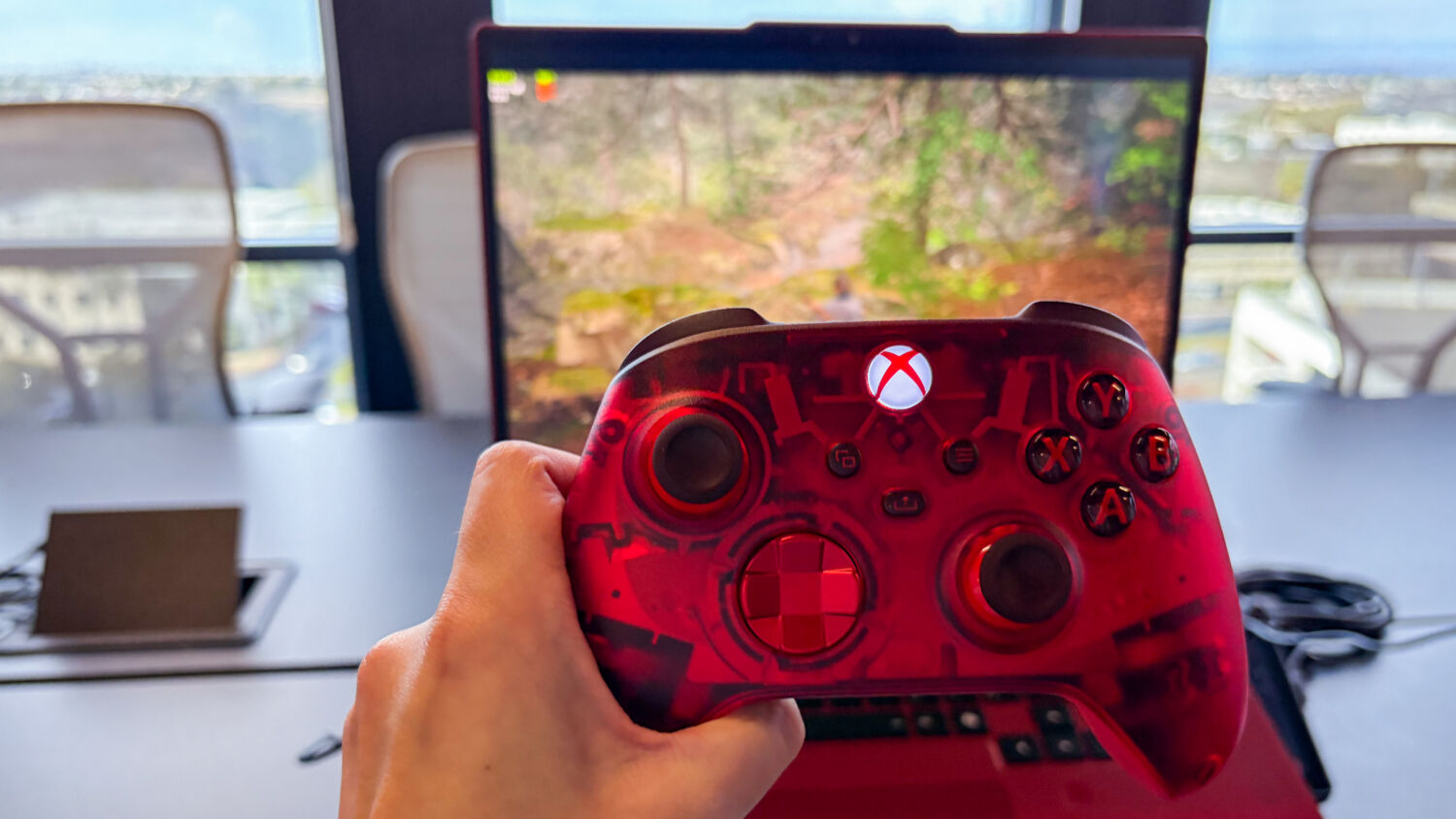
Those figures were put to the test during an office tour of Snapdragon Studios in San Diego, held as part of the Snapdragon X Series Architecture Deep Dive 2025 event, where several of the above titles were running in real-time. At low graphical settings with AMD FidelityFX Super Resolution 3.0 (FSR) enabled, Cyberpunk 2077 and Black Myth: Wukong averaged 146 FPS and 90 FPS. Overwatch 2, which currently only supports FSR 2.2, saw an average of 175 FPS.
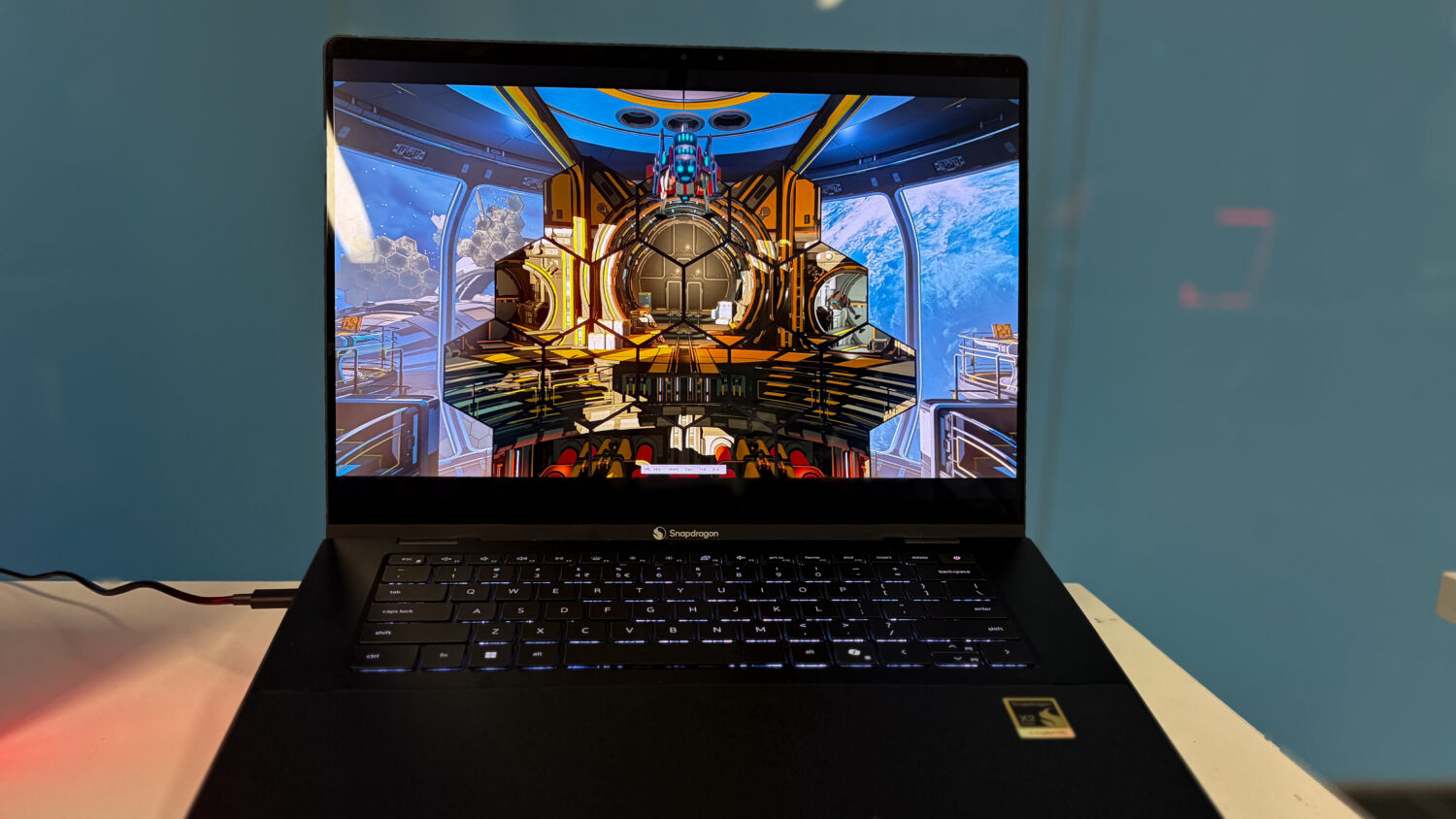
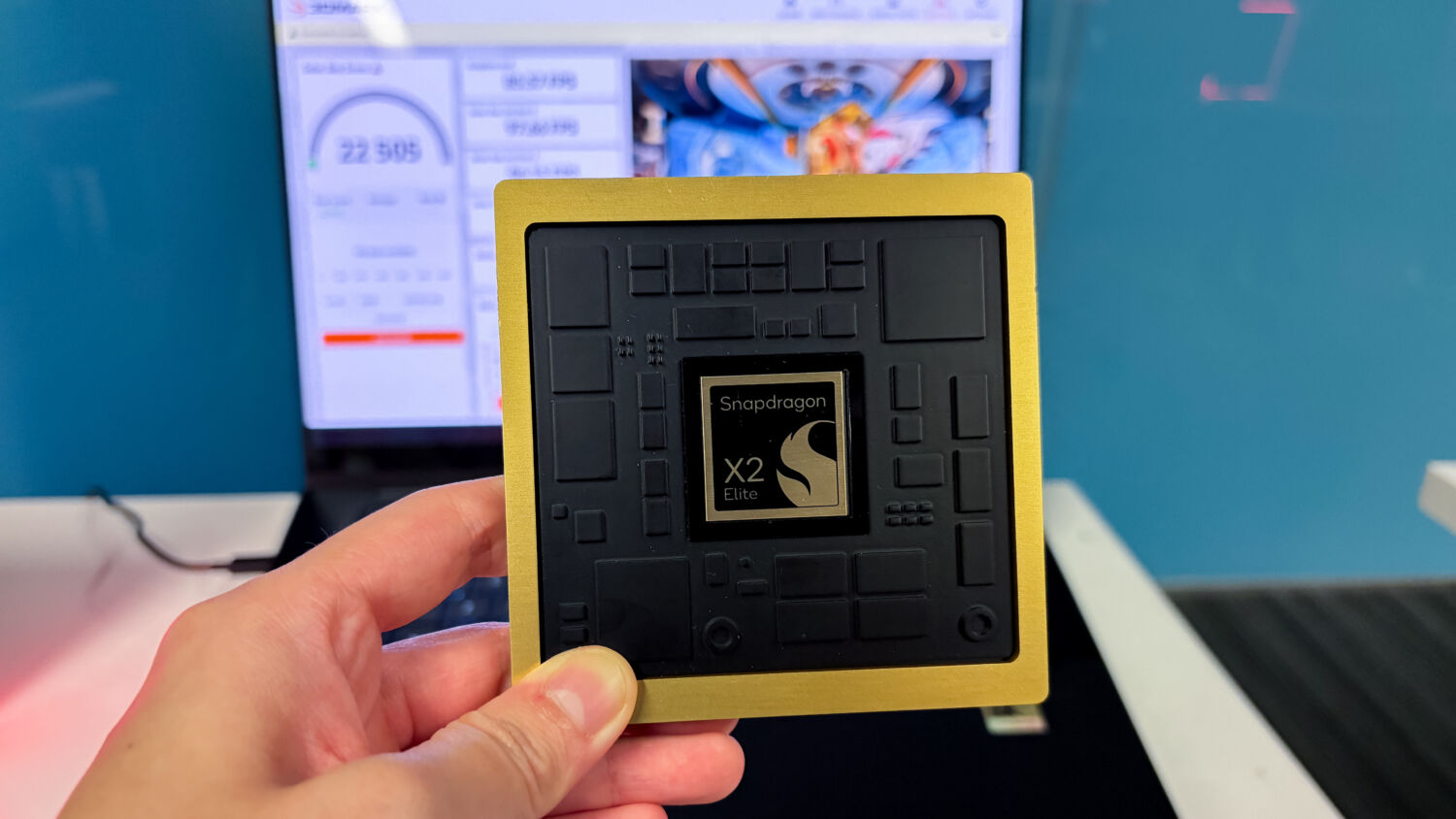
According to Qualcomm, the Adreno X2 is also 70 per cent faster than its predecessor at the same power, featuring a built-in Ray Tracing Unit, or RTU, that offers ray tracing functionality for all current and upcoming games that support it. As previously announced, the GPU is built on a new architecture utilising a modern 3-nanometre process, and comes as part of the Snapdragon X2 Elite Extreme chip, alongside a Qualcomm Hexagon NPU with 80 TOPS for AI tasks.
A separate session at the company’s headquarters offered some hands-on time with benchmarking performance, yielding the following results on Geekbench AI and 3DMark’s Solar Bay, on a 16-inch test laptop running on 48GB of memory and 1TB of storage:
- Geekbench AI – 2070 (Single Precision Score), 33,424 (Half Precision Score), 89,813 (Quantised Score)
- Solar Bay via 3DMark (plugged in) – 23,932, 91.00 FPS
- Solar Bay via 3DMark (unplugged) – 22,505, 85.57 FPS
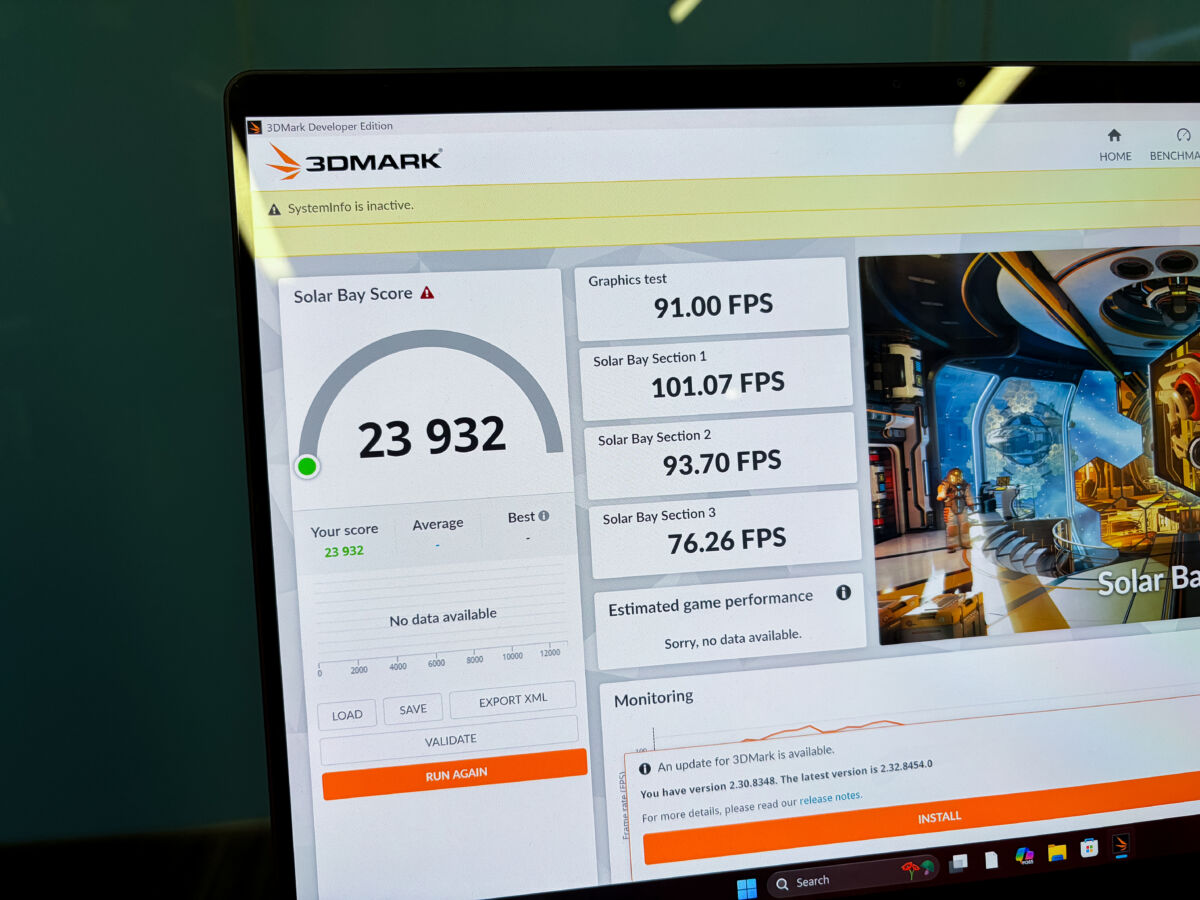
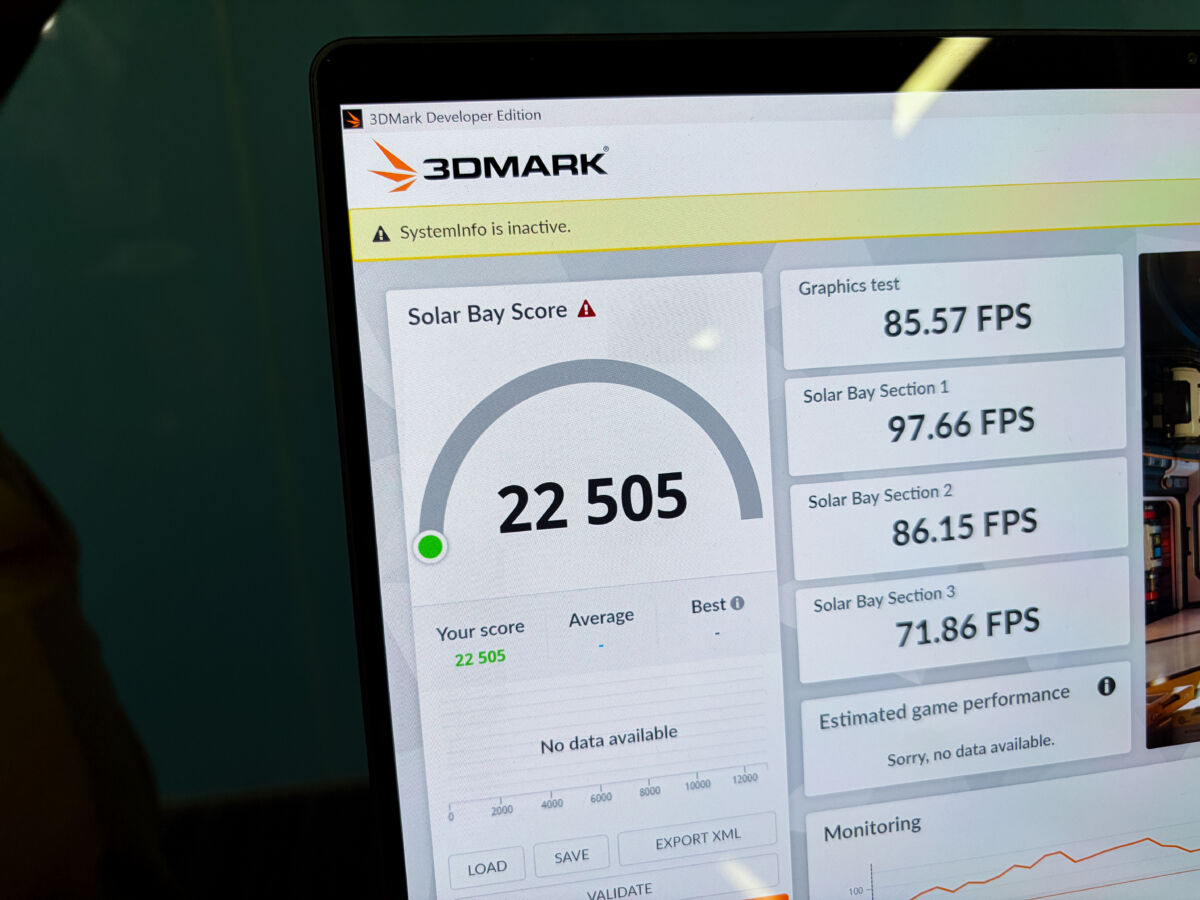
Notably, the small difference between the plugged and unplugged state of the Adreno X2 is impressive, painting an (theoretical) optimistic picture for both work and play. The PC gaming push doesn’t stop there, as Qualcomm continues to expand its ecosystem.
Already available are graphics driver updates for machines running Windows on Snapdragon, which bring performance improvements, bug fixes and new features, as well as validated support for “thousands of Windows games and applications”. The newly available Snapdragon Control Panel will add to the list, serving as a companion app to Adreno-powered devices that keeps GPU drivers up to date and automatically optimises game settings.
Additionally, users can expect native anti-cheat tools and systems, including Easy Anti-Cheat via Epic Games Online Services, Tencent ACE, Denuvo by Irdeto, and more – a high-priority implementation that saw the company engaged with “over 100 of the top game studios in the world”.
“We’re engaged with over 100 of the top game studios in the world, so it’s a global system. The first thing we really tackled was just knocking out all the anti-cheat solutions,” shared Dave Durnil, head of Gaming Ecosystems and Technologies at Snapdragon Studios, in an open Q&A held for the event.
Specifically for Epic Games, more than 15 years of collaboration have worked in the team’s favour. “They’re all in on Windows on Snapdragon, and bringing over not just the Easy Anti-Cheat but also the whole Epic Games service – I think it’s a really strong testament in terms of everything that we’ve been able to do and showing how we can work with developers,” he added.
With faster and more powerful processors like Apple silicon proving that Intel and AMD have an arms race on their hands, Qualcomm is looking to flank the others by focusing on what it does best – power the experience through a new chip based on its legacy of mobile processors and performance. Earlier this year, the company claimed that 10 percent of Windows PC sales in the U.S., priced above US$800, are powered by Snapdragon X chips, and the Adreno X2 looks set to raise that…unless Intel and AMD find a way to respond.

Si Jia is a casual geek at heart – or as casual as someone with Sephiroth’s theme on her Spotify playlist can get. A fan of movies, games, and Japanese culture, Si Jia’s greatest weakness is the Steam Summer Sale. Or any Steam sale, really.



 Yonk
Yonk